
Resources
.webp)
Scott Stephenson joins ZestyAI's Board of Directors
Appointment comes as ZestyAI achieves cash flow positive growth, doubles product usage, launches Agentic AI platform, and adds 26 new carrier customers
A new chapter for risk intelligence
ZestyAI announced that Scott Stephenson, former Chairman, President, and CEO of Verisk Analytics, has joined its Board of Directors, bringing one of the principal architects of the insurance industry’s data modernization to the company at a pivotal moment for artificial intelligence in the industry.
Stephenson spent more than two decades at Verisk, including nine as Chairman, President, and CEO (2013–2022), where he helped transform the company into a global data and analytics leader. Under his leadership, Verisk more than quadrupled its market capitalization, became a component of the S&P 500 Index, and was repeatedly named one of the World’s Most Innovative Companies by Forbes.
Prior to Verisk, Stephenson was a Senior Partner at the Boston Consulting Group, where he advised Fortune 50 CEOs and founded the firm’s Southeastern U.S. practice. He currently serves on multiple public and nonprofit boards, including PSEG (NYSE) and Definitive Healthcare (NASDAQ).
Stephenson’s appointment comes as insurance moves beyond its data-driven modernization phase into a new stage where artificial intelligence is embedded across enterprise decision workflows.
“Insurance is one of the world’s most essential financial systems — a centuries-old institution that underpins economic growth and resilience,” said Attila Toth, Founder and CEO of ZestyAI. “Over the past two decades, data and actuarial science reshaped underwriting and risk management. Scott helped lead that transformation.
"Today, artificial intelligence is becoming the core decision infrastructure across the enterprise. His experience building durable, proprietary analytics platforms at a global scale is invaluable as we build the next generation of AI-powered risk intelligence.”
“This industry has endured for centuries because it adapts,” said Scott Stephenson. “The last major shift put data and analytics at the center of the enterprise. The next competitive frontier will belong to companies that build durable advantages from proprietary data and apply artificial intelligence to understand and manage risk with greater precision.
"ZestyAI is building exactly that kind of platform, pairing property intelligence with trustworthy AI to strengthen how insurers underwrite and manage portfolios. I look forward to working with the team as they scale this capability across the industry.”
A Year of Momentum and Scale
Stephenson joins ZestyAI at a moment of accelerating scale and operating leverage. In the past year ZestyAI has:
- Turned cash flow positive while more than doubling product usage across underwriting, rating, and reinsurance workflows
- Added 26 new clients, including Applied Underwriters, California Casualty, Lemonade, and Marsh
- Expanded commercial relationships with 12 existing enterprise customers through new agreements, including Berkshire Hathaway, the California FAIR Plan, and CSAA
- Surpassed 200 regulatory approvals nationwide, spanning multiple products and perils
- Introduced ZORRO Discover™, its agentic AI platform, embedding AI into enterprise workflows, including underwriting, portfolio management, and competitive intelligence
- Launched Z-SPARK™ which provides modern fire science and property-level intelligence to analyze how building materials, maintenance conditions, surrounding structures, local fire response capacity, and climate drive ignition and fire spread
Building on its continued leadership in wildfire risk analytics, in 2025 ZestyAI significantly expanded the adoption of its severe convective storm, wind, hail, and non-weather water suite of models, reinforcing ZestyAI’s evolution into a multi-peril decision intelligence platform.
That momentum is translating into measurable market impact. In 2025 alone, insurers using ZestyAI enabled coverage for nearly one million families and businesses previously considered difficult or uneconomical to insure, expanding access to coverage in catastrophe-exposed regions while maintaining underwriting discipline.
“ZestyAI has delivered what we look for in a market-defining company — disciplined execution, enterprise adoption, and profitable growth,” said Ben Cukier, Founder and Managing Partner at Centana Growth Partners and board member of ZestyAI.
“The company has expanded into a multi-peril AI platform embedded across underwriting, rating, and reinsurance workflows. Welcoming Scott Stephenson to the board at this stage reinforces both the scale of the opportunity and the strength of the foundation already in place.”
Kingstone Partners with ZestyAI to Strengthen Wildfire Risk Analytics for California Entry
The insurer will use ZestyAI’s AI-powered wildfire model to evaluate property-level risk as it enters the California homeowners market.
ZestyAI today announced a partnership with Kingstone Companies, Inc. (“Kingstone” to deploy property-level wildfire risk analytics as part of Kingstone’s planned expansion into the California homeowners market. As previously disclosed, Kingstone will enter California in Q2 2026 on an excess and surplus lines (E&S) basis, applying the same disciplined, data-driven underwriting approach that has driven record financial results in New York.
As part of its California rating and underwriting framework, Kingstone has integrated ZestyAI’s Z-FIRE wildfire risk model among the tools used to evaluate wildfire exposure at the individual-property level and to support disciplined underwriting in catastrophe-exposed regions.
Z-FIRE uses machine learning to evaluate each property’s unique characteristics, including defensible space, building materials, topography, and vegetation, to assess wildfire exposure at a granular level. This property-level insight enables Kingstone to differentiate risk within the same territory, improving rating and underwriting precision and portfolio oversight.
“Our California entry reflects the same disciplined, data-driven approach that has driven our results in New York,” said Sarah (Minlei) Chen, SVP, Chief Actuary and Head of Product Management.
“ZestyAI’s Z-FIRE model complements our Select platform by providing the property-level wildfire intelligence we need to rate and underwrite with precision in a complex and dynamic market like California.”
“Wildfire risk is pushing the insurance industry to embrace more advanced analytics and AI-driven decision making,” said Attila Toth, Founder and CEO of ZestyAI.
“With a clearer understanding of risk, insurers can make confident decisions about where they grow, how they manage exposure, and how they continue serving communities in wildfire-prone regions.”
Kingstone recently announced plans to enter the California homeowners market on an excess and surplus lines basis as part of its broader growth strategy. The move marks the insurer’s first geographic expansion outside the Northeast and reflects growing demand for insurance capacity in wildfire-exposed regions.
Z-FIRE is approved across all Western wildfire states and was the first AI-based wildfire model approved as part of a carrier rate filing in California. ZestyAI’s broader portfolio of AI risk models has secured more than 200 regulatory approvals nationwide.
Kingstone’s California strategy builds on the operational and underwriting transformation the Company has executed over the past four years. The Company’s E&S structure provides pricing flexibility to apply forward-looking wildfire models, set rates to achieve target margin requirements, and maintain strict underwriting standards including real-time accumulation management. Kingstone is maintaining a 30% quota share on its California business to manage net exposure during the initial scaling period.

Maryland and Nevada Greenlight ZestyAI's Severe Convective Storm Models as SCS Losses Top $50B
Approvals in Maryland and Nevada expand ZestyAI’s property-level risk models to 32 states nationwide.
ZestyAI today announced that the Departments of Insurance in Maryland and Nevada have reviewed and accepted ZestyAI’s Severe Convective Storm (SCS) risk models for use in carrier rate and rule filings, bringing the company’s SCS Suite to 32 approved states across the U.S.
Severe convective storms (SCS) have become one of the most persistent and costly sources of insured loss in the U.S., with annual losses exceeding $50 billion in each of the past three years. This trend has accelerated into 2026: in March alone, Gallagher Re reported multiple billion-dollar outbreaks impacting across several regions in the U.S.
“As loss patterns become more localized and volatile, traditional ZIP code-based models are no longer sufficient to capture the true drivers of risk,” said Bryan Rehor.
“These approvals reflect a shared commitment between regulators and carriers to more transparent, property-level models that clearly explain the ‘why’ behind a risk score and support more defensible rate-making.”
The approvals build on continued momentum across the ZestyAI platform, including the recent launch of Z-SPARK™, an AI-powered model that predicts non-weather fire risk at the individual property level. It evaluates the factors that influence ignition and fire spread to help insurers identify the structures most likely to generate costly fire losses.
ZestyAI’s SCS Suite is trained and validated on verified carrier claims data and delivers clear explanations of the factors behind each property’s risk score. By analyzing how local climatology interacts with individual property characteristics, the platform predicts the likelihood and severity of hail and wind claims with far greater precision than traditional territory- or ZIP code–based methods.
Key capabilities include:
- Z-HAIL: Quantifies hail risk using property-level drivers—roof geometry, accumulated damage, and local climatology—to pinpoint the buildings at greatest likelihood of hail damage, even within the same area.
- Z-WIND: Analyzes wind risk using AI-driven 3D analysis of roof condition, complexity, and potential failure points —together with localized wind climatology—to determine which buildings are most susceptible to wind damage.
- Z-STORM: Predicts the frequency and severity of storm damage claims, including hail and wind, examining the interaction between climatology and the unique characteristics of every structure and roof.
ZestyAI’s portfolio of AI-powered risk models has earned more than 200 regulatory approvals nationwide, reinforcing its continued expansion across key insurance markets as carriers adopt more precise, property-level approaches to managing weather and non-weather risk
Why 2026 Severe Storm Losses Are Set Before the Storm Forms
Severe storm losses don't begin when a storm materializes. They're shaped earlier — by underwriting and renewal decisions, by the quality of underlying property data, and by how risk accumulates across a portfolio over time. A new ZestyAI on-demand session, featuring Robert Silva, ACAS (formerly Farmers Insurance) and Keren Chheang, FCAS (formerly Wawanesa), examines the upstream patterns driving 2026 severe convective storm (SCS) outcomes — and where traditional CAT models are diverging most sharply from realized loss.
About this session: Loss Happens Before the Storm: The New Drivers of 2026 Severe Storm Risk is an on-demand webinar covering why storm losses vary dramatically within the same ZIP code, what three record SCS years (2023: $66B, 2024: $59B, 2025: $51B) reveal about portfolio volatility, and the underwriting and pricing decisions carriers are making now. Featuring Robert Silva, ACAS, and Keren Chheang, FCAS.
Prefer to watch instead? Access the full on-demand session → — includes property-level signals, CAT model gaps, and live Q&A.
When are 2026 severe storm losses actually being set?
Earlier than most carriers price for. Once a storm forms, the loss outcome on any given property is largely determined by conditions that were locked in months or years before: roof age and condition, the property characteristics the carrier underwrote on (or didn't), the renewal decision made at the last anniversary, and the aggregate exposure the portfolio quietly accumulated through prior cycles. The storm is the trigger. The loss was already set up.
That's the framing shift behind this session. Carriers that treat storm season as the moment exposure crystallizes consistently arrive too late to influence the loss outcome.
Why are traditional CAT models misaligned with realized loss?
Because the gaps that drive loss aren't event-driven, they're data-driven. Traditional CAT models work at a level of geographic and structural abstraction that smooths over property-level variability — roof age, prior weathering, soft-metal exposure, structural state. When the building stock is uniform, that abstraction works. When it isn't — and three record years of accumulated damage mean it isn't — the modeled loss and the realized loss diverge. Carriers feel this as adverse surprise in seasons the model didn't flag.
What upstream decisions actually drive portfolio-level storm outcomes?
Four levers, in roughly the order they take effect:
- Underwriting data quality. The accuracy, coverage, and consistency of property-level information at the point of underwriting sets the ceiling for every downstream decision.
- Rating and segmentation choices. Whether structural signals — roof age, condition, prior loss exposure — are priced into the rate, or smoothed into a territory average.
- Renewal decisions. Whether deteriorating properties are repriced, repositioned, or non-renewed before the next season, or carried at the prior year's terms.
- Portfolio accumulation. Whether risk is concentrating in degraded properties or in better-conditioned ones across the book.
Each of these decisions happens long before a storm forms. Each shapes how much loss any future storm will produce.
How do property-level signals change underwriting and renewal decisions?
Property-level signals — roof condition, accumulated weathering, prior structural exposure — let carriers segment risk before it shows up as a claim. The session walks through how carriers are using this layer of intelligence to inform underwriting decisions, calibrate rating plans against structural realities the territory map can't see, and identify properties that quietly migrated from "acceptable" to "deteriorated" since the last renewal. The point isn't to write less business. It's to know which business is changing before the storm reveals it.
What this means for 2026 storm strategy
As the 2026 season takes shape, many of the loss outcomes carriers will record this year are already being set — through underwriting decisions being made now, through renewal terms being finalized, through portfolio accumulation patterns that won't be visible until they show up as concentrated loss. The session is built for product, underwriting, pricing, portfolio, actuarial, CAT, and reinsurance teams shaping how their organization shows up before the first storm forms.
Watch the full session on demand
Loss Happens Before the Storm: The New Drivers of 2026 Severe Storm Risk →
Featuring Robert Silva, ACAS (formerly Farmers Insurance) and Keren Chheang, FCAS (formerly Wawanesa), the session goes deeper on CAT model divergence, the four upstream loss drivers, and what differentiated underwriting can move on 2026 portfolio outcomes.
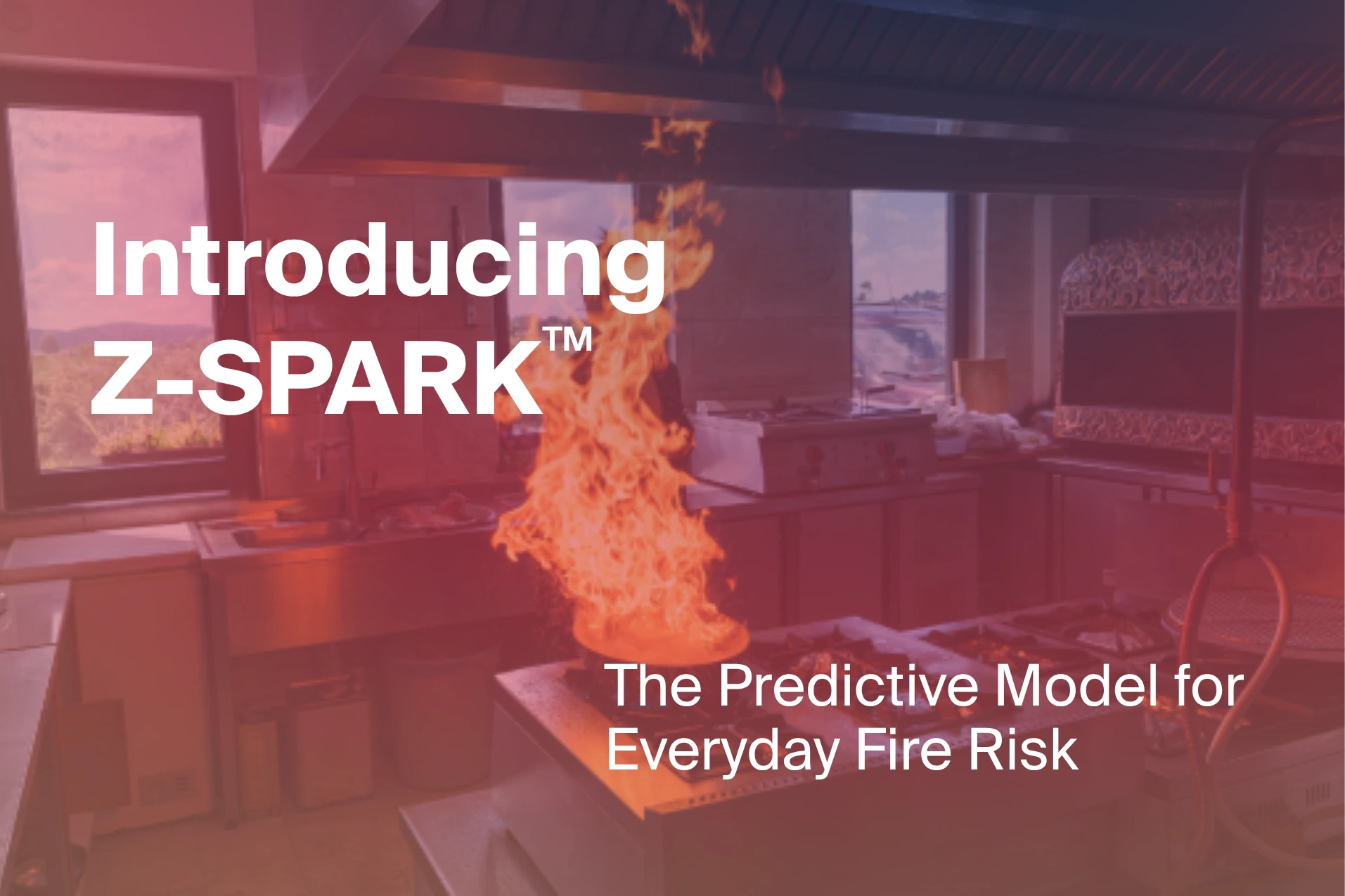
ZestyAI Launches AI-Powered Property-Level Model to Predict $25B “Everyday Fire” Risk
ZestyAI today announced Z-SPARK™, an AI-powered model that predicts non-weather fire risk at the individual property level.
The model evaluates the factors that influence ignition and fire spread to help insurers identify the structures most likely to generate costly fire losses.
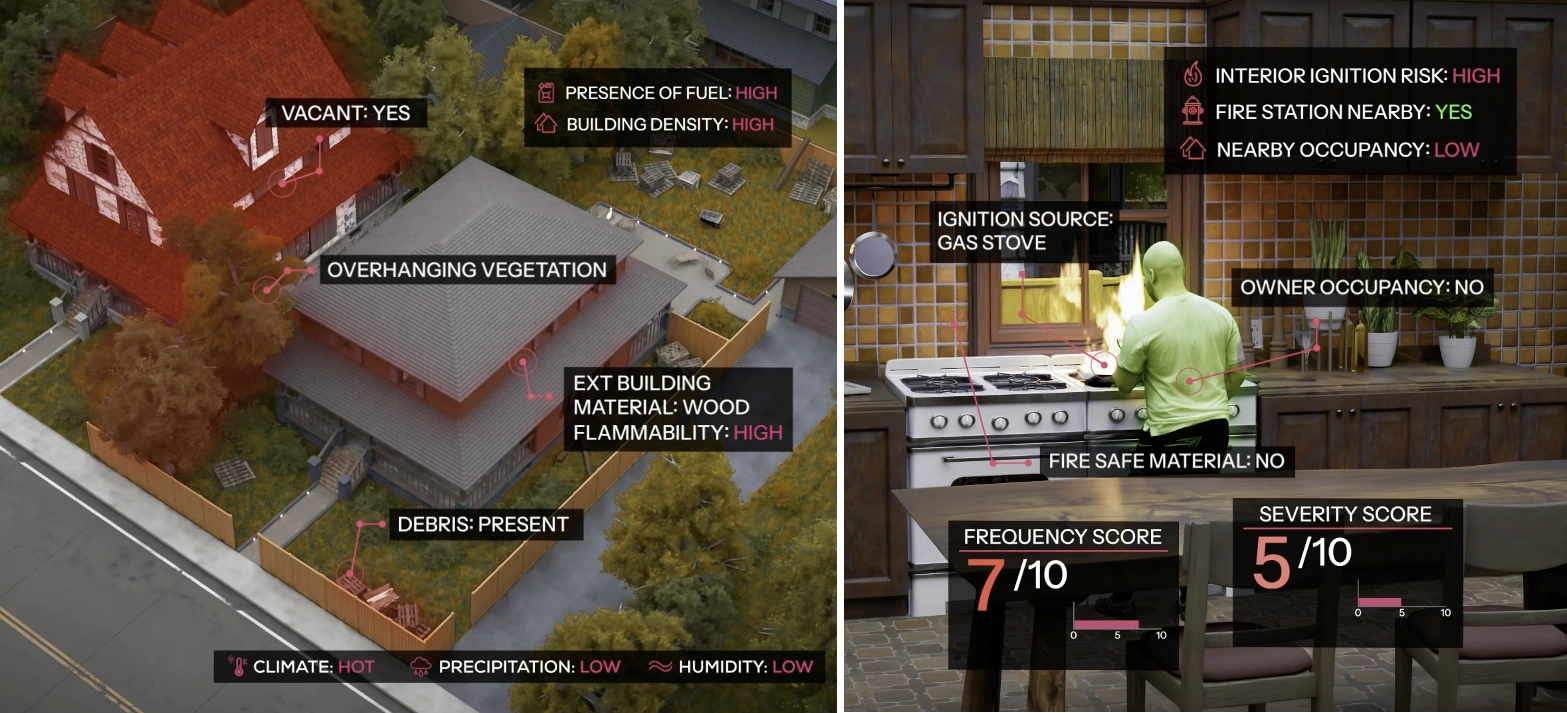
Most insurers still evaluate fire risk using neighborhood or territory level averages and limited historical loss data, even though risk can vary dramatically from one property to the next. Without property-level insight, insurers struggle to price risk accurately, increasing the likelihood of adverse selection and unexpected losses.
In 2023, $25 billion in property losses occurred from non-weather-related fire incidents from sources such as grills, appliances, heaters, and electrical faults.
Z-SPARK applies modern fire science and property-level intelligence to analyze how building materials, maintenance conditions, surrounding structures, local fire response capacity, and climate drive ignition and fire spread.
The model predicts both the probability of ignition and potential loss severity using advanced machine learning trained and validated on millions of real fire incidents and verified insurance claims.
With these insights, insurers can:
- Price with precision — align premiums with true property-level fire risk rather than broad geographic averages
- Streamline operations — support straight-through processing for low-risk properties
- Prioritize underwriting resources — focus manual review and inspections where risk warrants closer scrutiny
- Expand confidently — write business in challenging markets with a clearer view of actual exposure
- Protect portfolio performance — proactively manage concentration risk before losses accumulate
Z-SPARK delivers 30× greater risk differentiation than traditional territory-based models.
“Non-weather fire is one of the most costly and least understood risks in property insurance,” said Kumar Dhuvur, Founder and Chief Product Officer of ZestyAI.
“Two homes on the same street can have dramatically different fire risk depending on how they were built, maintained, and what surrounds them. Yet most insurers still evaluate that risk using community-level scores. Z-SPARK reveals those hidden differences so insurers can make decisions based on the actual risk at each property.”
ZestyAI’s Z-FIRE wildfire model is widely used by insurers to assess catastrophic wildfire exposure. Z-SPARK extends that expertise to everyday building fires, applying the same property-level intelligence to the most costly source of insurance loss.
Together with models for hail, wind, severe convective storms, and water damage, Z-SPARK expands ZestyAI's suite of AI-powered capabilities across the most costly perils affecting insurance portfolios. Combined with ZORRO Discover — which applies agentic AI to help insurers research markets, prepare filings, and act on risk intelligence faster — the ZestyAI platform gives insurers a comprehensive view of property-level risk and the tools to act on it across underwriting, pricing, and portfolio management.
American European Insurance Group Strengthens Multi-Peril Underwriting with ZestyAI
Insurer selects AI models for water, hail, and wind to drive disciplined growth and improve exposure management
ZestyAI today announced that American European Insurance Group (AEIG) has selected its suite of regulatory-approved AI models to enhance underwriting, pricing, and exposure management across its multi-state property portfolio.
Through the ZestyAI platform, AEIG has adopted models for non-weather water (Z-WATER™), hail (Z-HAIL™), and wind (Z-WIND™), along with Z-PROPERTY™ to deliver property-level risk insight.
ZestyAI’s models are built, trained, and validated on carrier-contributed loss data and analyze the interaction between property characteristics, environmental conditions, and peril behavior to predict claim frequency and severity at the individual property level. Carriers apply these insights at new business and renewal to sharpen risk selection, improve pricing alignment, and manage portfolio concentration. ZestyAI’s models have secured regulatory approvals that enable transparent and defensible use in underwriting and pricing.
“As we operate across states with varied exposure profiles, we need consistent, property-level insight into what drives losses across wind, hail, and non-weather water,” said Steve Hartman, President and CEO of AEIG.
“ZestyAI gives us the precision to align underwriting and pricing with expected loss performance, support our agent partners with greater transparency, and maintain disciplined growth. Corporate experience alone is no longer sufficient to intelligently compete in a crowded marketplace, and the ability to leverage both traditional and non-traditional data in best-in-class account underwriting and pricing is a requirement for sustained profitability.”
“Regional insurers like AEIG are balancing expansion with the need to stay highly disciplined in how they evaluate property risk,” said Attila Toth, Founder and CEO of ZestyAI.
“By grounding underwriting and pricing decisions in verified, property-level intelligence, AEIG can expand across diverse exposures with confidence while protecting portfolio performance.”
Ready to see how ZestyAI works on your book of business?
Tell us a little about your needs. We'll show you how we reduce losses and help you price with precision.