
Reports & Research
Explore proprietary research packed with data, insights, and real-world findings to help carriers make smarter decisions.
.png)

Now Streaming: Roof Risk Master Class
Effective strategies for better risk management
Are rising storm costs and inaccurate roof assessments impacting your bottom line?
Now available to stream, The Science of Roof Risk master class will equip you with the latest strategies and techniques to master roof risk assessment.
- Enhance your roof risk assessment by 60X
- Improve your combined ratio
- Reduce storm-related roof claims
- Strengthen new business selection
What we cover:
Your presenters, Ross Martin (VP, Risk Analytics) and Sam Fetchero (Head of Marketing) will share with you:
- The Problem of the Roof: Uncover the underlying factors driving rising storm losses and why traditional risk assessment methods fall short.
- The Science Behind Predicting Losses: Explore key factors impacting roof risk and loss prediction, including roof age, condition, complexity, and peril-specific models.
- Accuracy-focused Risk Models: Discover advanced modeling techniques that enhance predictive accuracy.
- Understanding Storm Climatology: Learn how storm climatology impacts roof risk and how to integrate these insights into your risk assessment strategies.
- Real-World Results: Witness a comparative analysis of these predictive factors using actual carrier data. Understand the strengths and weaknesses of each approach.
- Priorities of Leading P&C Insurers:
See what your peers asked with valuable insights to take back to your team.
Who Should Watch?
This video is ideal for Executives, Product Managers, Actuaries, Underwriters, and CAT Modelers committed to enhancing their roof risk assessment capabilities.
Bonus Guide
As a bonus for watching, you'll receive a downloadable study on the latest roof risk assessment strategies: Preparing for the Storm: The Insurers Guide to Roof Risk.
Access Now
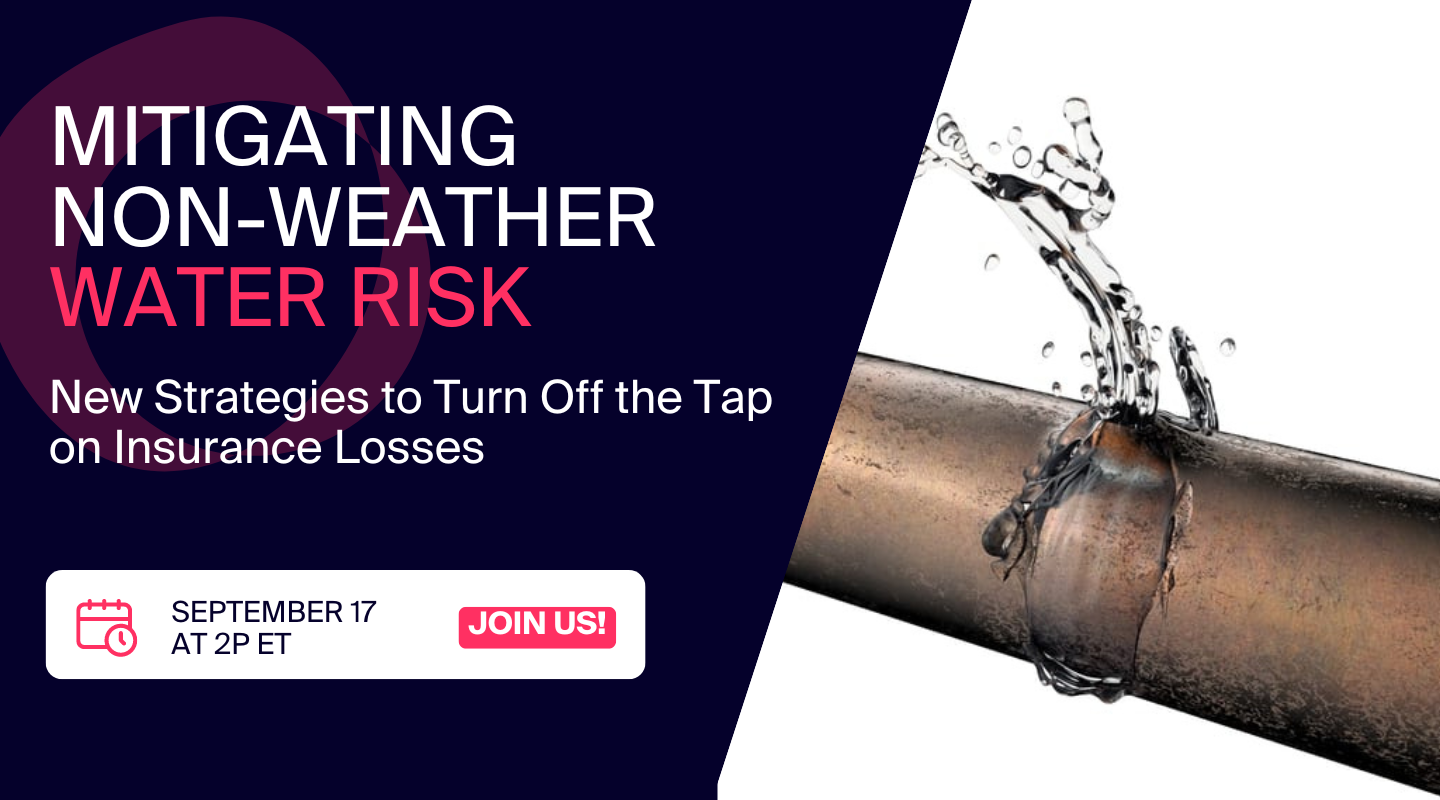
Exclusive Webinar: Mitigating Non-Weather Water Risk
New strategies to turn off the tap on insurance losses
From Costly Water Losses to Millions in Savings
Non-weather water claims are a leading cause of property insurance losses, costing insurers over $20 billion annually.
Join us for a FREE live webinar where our experts will discuss the latest trends, challenges, and insights to help you mitigate non-weather water risk.
What We'll Cover
Our experts Rob Silva, ACAS (Director of Customer Success) & Sam Fetchero (Head of Marketing) will present:
- Current Trends: Understand the rise in severity and total loss costs of non-weather water claims.
- Risk Assessment Challenges: Learn why traditional methods fall short in assessing non-weather water vulnerability.
- Key Risk Factors: Identify the main drivers of non-weather water damage.
- Strategic Insights: Discover strategies to improve your management of non-weather water claims.
- Z-WATER in Action: Experience our new AI-powered model that predicts non-weather water risk with unparalleled accuracy.
- Interactive Q&A: Get your questions answered by our experts.
Who Should Attend
This webinar is ideal for Executives, Product Managers, Actuaries, Underwriters, and CAT Modelers committed to enhancing their understanding and management of non-weather water risks.
Bonus Content
As a bonus, you'll receive our exclusive infographic, "Below the Surface: Research Reveals Knowledge Gap in Homeowner Water Loss Prevention and Coverage."
This research gives key insights into water loss experiences, coverage details, homeowner protection measures, and information on water shutoff devices and heater conditions.
Register Now
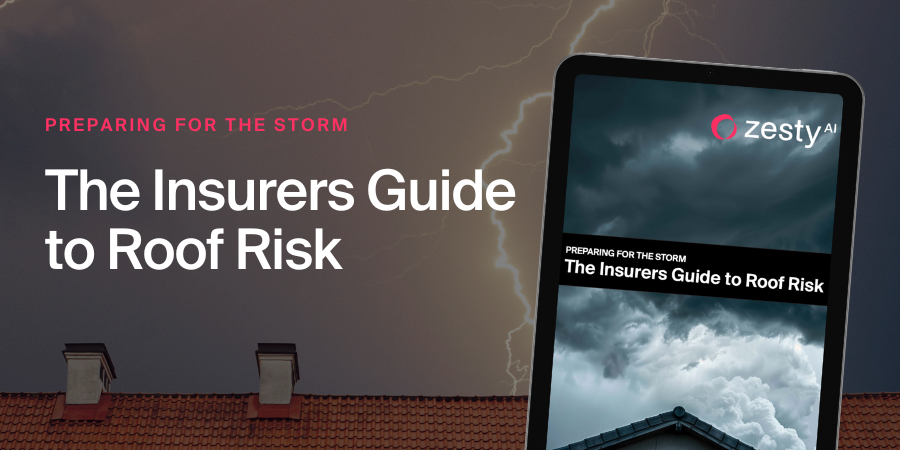
Now Available: The Insurers Guide to Roof Risk
Learn how leading insurers are mastering roof risk and maximizing lift
It’s hard to overstate how important the roof is from an insurability standpoint. The roof represents significant risks and potential opportunities, making it a critical focus area for insurers. This has become even more important in recent years as the impact of severe convective storms is often reflected in roof losses. Understanding this, ZestyAI has released new research for property insurers called The Insurers Guide to Roof Risk.
Download The Insurers Guide to Roof Risk
In an era where the severity and frequency of roof-related claims are on the rise, particularly due to the increasing impact of severe convective storms, innovative tools and strategies are essential. The Insurers Guide to Roof Risk provides actionable insights to improve risk assessment, underwriting processes, and overall business strategy.
What’s Inside the Guide?
The Insurers Guide to Roof Risk includes:
- Roof Failure Factors: Learn the underlying contributing factors behind why older roofs fail more often.
- Beyond Roof Age: Discover why roof complexity, condition, and climate are more important than roof age alone.
- Identifying Missing Risk Factors: Understand the key factors to roof risk that most traditional models miss.
- Advanced Risk Segmentation: See how using machine learning and new data sources can split risk more than 60 times better than traditional models.
- Portfolio Optimization: Access a comprehensive toolbox to optimize your portfolio and new business selection to generate exponential lift versus traditional models.
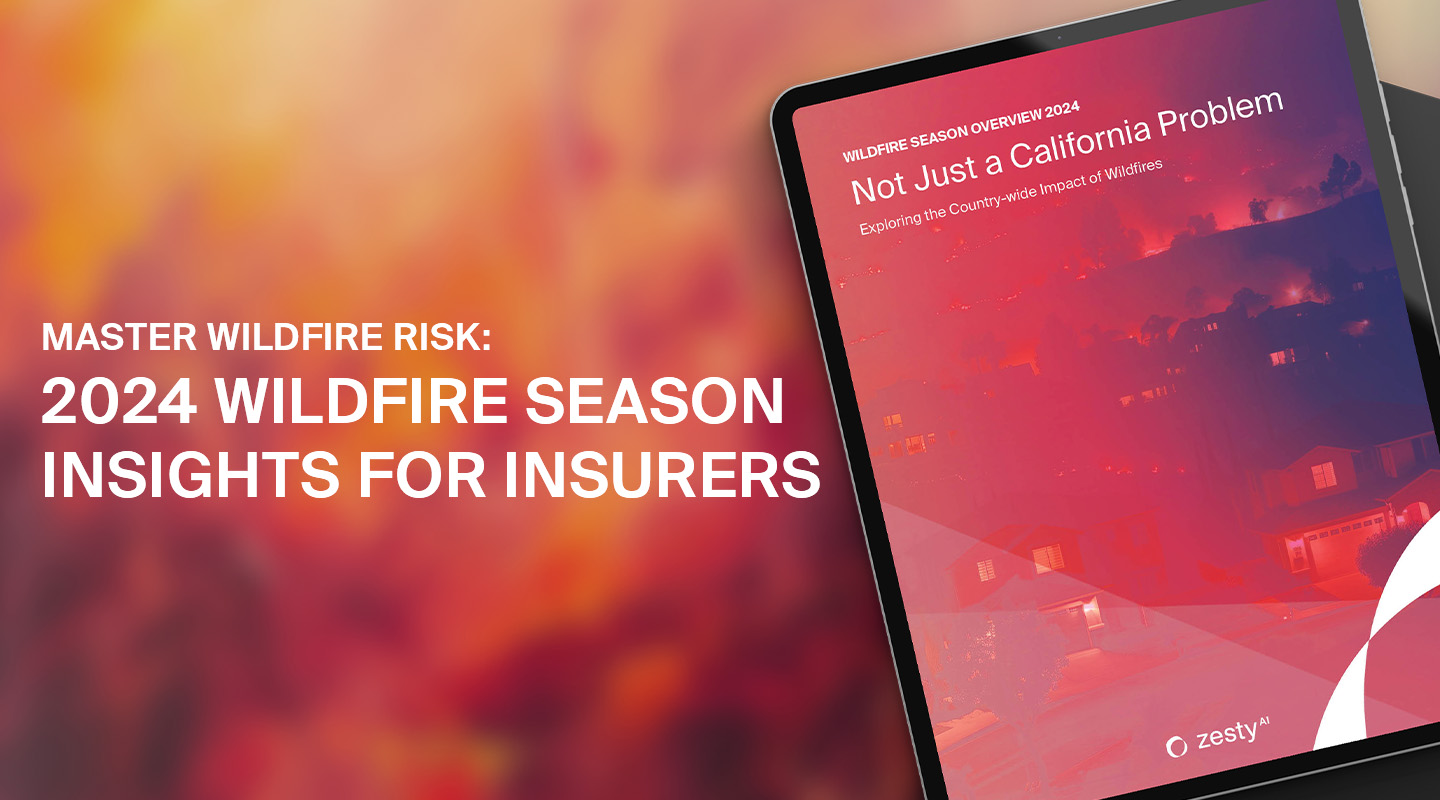
Now Available: ZestyAI’s 2024 Wildfire Season Overview
Annual Wildfire Season Overview provides insights to assist insurers in effectively managing wildfire risk.
Annual Wildfire Season Overview provides insights to assist insurers in effectively managing wildfire risk.
ZestyAI has released its annual Wildfire Season Overview for 2024. This year’s guide provides critical insights carriers need to stay ahead of the rapidly evolving wildfire landscape. Offering more than just data, this year’s guide is designed to help insurers make informed risk decisions in some of the country’s most volatile states.
Download ZestyAI's 2024 Wildfire Season Overview
This year’s guide includes:
- Countrywide Wildfire Impact Analysis: Understand how wildfires are affecting regions beyond traditional hotspots like CA, including significant events in TX & NM.
- Future Wildfire Trends: Explore predictions for the 2024 wildfire season and understand the long-term implications of current conditions on wildfire risks.
- Regulatory Insights: Stay updated on the latest regulations affecting wildfire risk assessment insurance practices.
- AI-driven Risk Models: Learn how ZestyAI's Z-FIRE model accurately predicts wildfire risks and assists insurers in making informed decisions.
- Property-Level Risk Assessments: Discover the importance of granular, property-specific risk evaluations to improve underwriting accuracy and transparency for consumers.
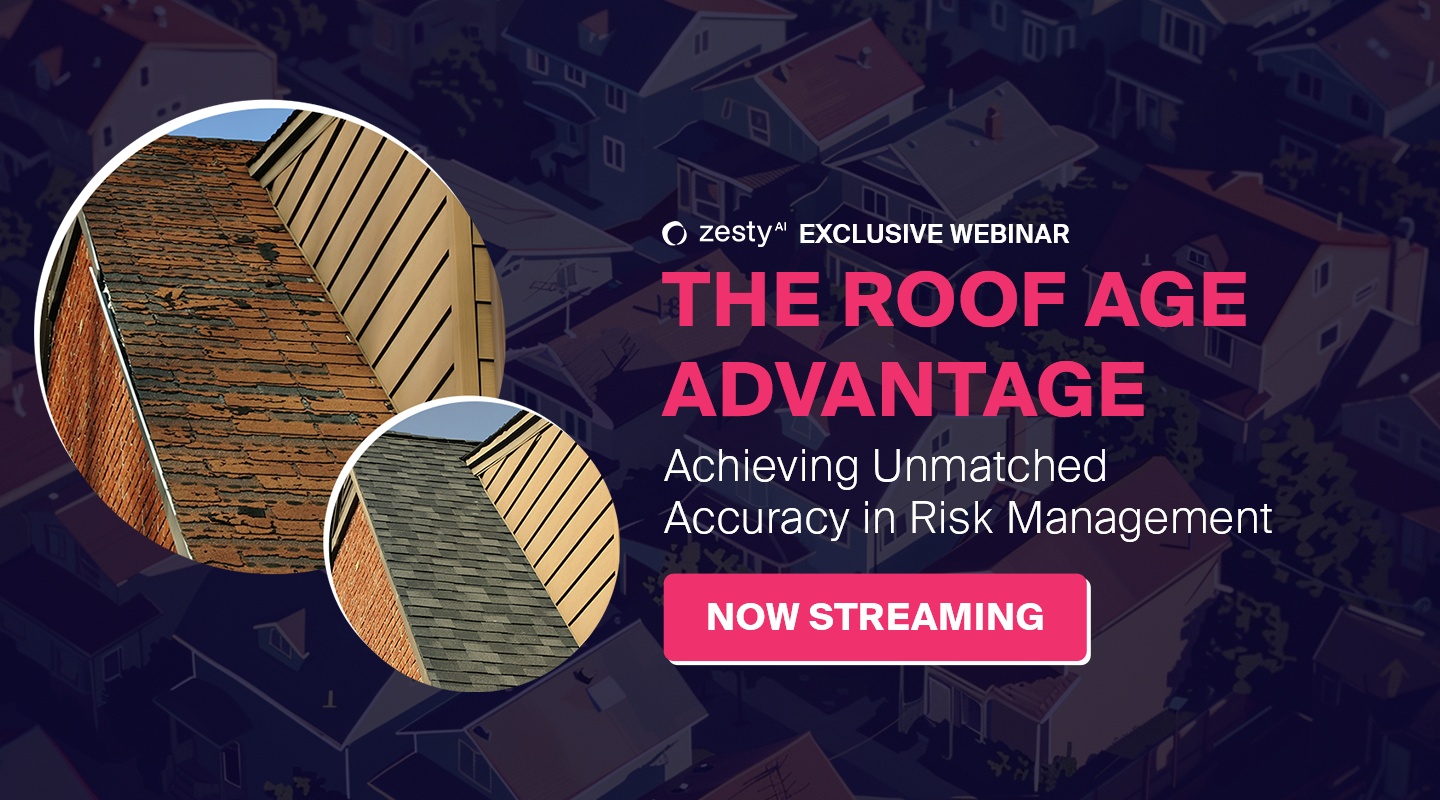
The Roof Age Advantage Webinar Now Available On Demand
Achieve unmatched accuracy in risk management
Costing insurers approximately $19 billion every year, roof claims stand as the primary driver of property insurance losses.
Traditional methods of obtaining roof age information are deeply flawed. Most carriers depend on policyholder or agent-reported data, which is often inaccurate, leading to blind spots in assessing property risk. In a recent ZestyAI survey, 63 percent of homeowners reported not knowing the age of their roof if they were not in their homes the last time it was replaced.
Join our expert panel for a deep dive into leveraging roof age analytics for a cutting-edge underwriting process and gain insider knowledge on:
- The Leading Cause of Claims: unveil the hidden truths behind roof-related claims and the costly consequences of outdated assessment methods.
- A New Era of Data: Learn about ZestyAI’s pioneering approach to roof age analytics, incorporating building permits, historical imagery, and AI for a comprehensive view
- Precision at Scale: See how to apply precise, AI-driven roof age data across your entire portfolio for consistent and reliable underwriting and claims decisions
- Technical Decision Making: Empower your actuaries and underwriters with the insights needed to enhance risk selection and optimize pricing strategies
- Efficiency in Operations: Streamline inspections and operations, focusing resources where they’re needed most, improving time-to-quote, and enriching the customer experience
- Best Practices: Learn how leading carriers are using roof age, roof condition, and peril-specific models to improve risk selection and lower combined ratios
This transformative session is available on demand. Learn how to enhance accuracy, efficiency, and profitability in property insurance.
Save Your Spot
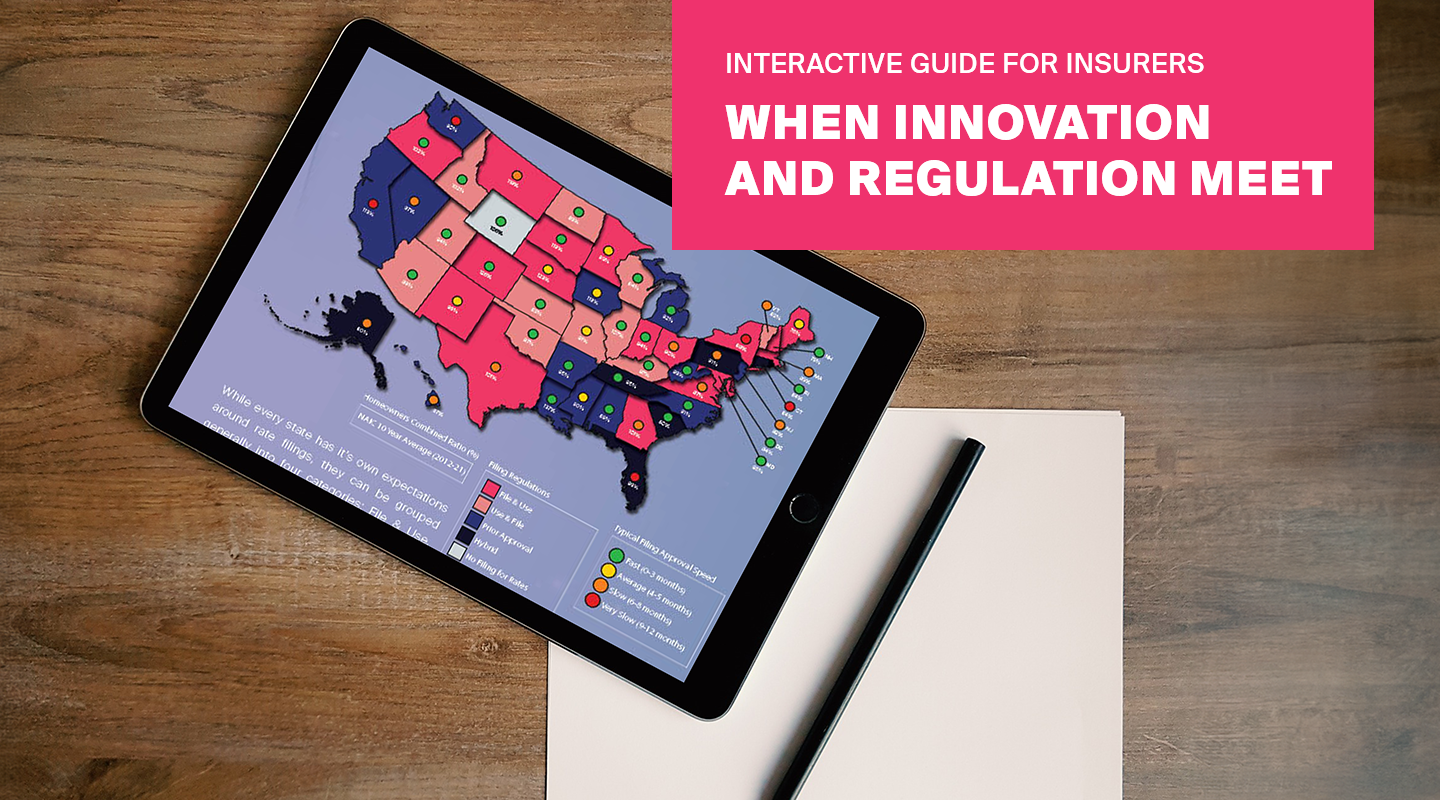
New Research: What Insurers Need to Know About AI and Regulatory Compliance
Master the future of insurance compliance with ZestyAI's interactive guide, featuring a state-by-state regulatory map, AI partnership checklist, and insights into emerging challenges.
In an ever-evolving regulatory environment, staying informed and adaptable is crucial. Our latest interactive guide, "When Innovation and Regulation Meet", offers a comprehensive toolkit for navigating the complexities of insurance compliance and the integration of AI technologies.
What's Inside?
- Regulatory Landscape Map: Delve into a detailed state-by-state analysis, uncovering the intricacies of filing laws and approval speeds.
- Staying Ahead of Regulation Changes: Learn how to stay prepared and ensure your compliance strategies are future-proof, aligning with the latest regulatory expectations.
- Essential AI Partner Checklist: Choosing the right AI partner is crucial for success. Our guide offers a meticulous checklist for selecting a partner that is not only compliant but also transparent and supportive, ensuring you make an informed decision.
- Emerging Regulatory Concerns: What do you need to know about privacy, bias, and AI oversight?
- Real-World Applications: Discover how ZestyAI's collaborative approach with regulatory entities has led to successful model approvals across the United States.
Why This Guide?
As the regulatory framework becomes increasingly complex, having a reliable and insightful resource is indispensable. Our guide is tailored for insurance professionals seeking to enhance their regulatory strategy, embrace AI innovation responsibly, and achieve a competitive edge in the market.
Ready to get up to speed on 2024's regulatory environment? Access the guide.
ZestyAI Models Approved to Transform Storm Risk Analysis in Minnesota
Regulatory approval for property specific insights will help insurers tackle severe convective storm risks after three billion-dollar weather events in Minnesota in 2024
ZestyAI, the leading provider of AI-powered property and risk analytics, today announced that its Severe Convective Storm suite, including Z-HAIL™, Z-WIND™, and Z-STORM™, has received regulatory approval from the Minnesota Department of Commerce.
This milestone supports Minnesota insurers in improving storm risk assessment, enhancing underwriting precision, and supporting proactive risk management strategies.
Minnesota has seen significant losses from severe convective storms. According to data from NOAA’s National Centers for Environmental Information (NCEI), the state experienced three billion-dollar weather events in 2024 alone, with hail and wind causing extensive damage. A July storm in the Twin Cities resulted in more than $1.8 billion in insured losses, highlighting the need for innovative solutions to manage storm-related risks.
ZestyAI’s Severe Convective Storm suite delivers property-specific risk insights by combining climatology analysis with granular property data. Built on extensive loss data and validated by regulatory authorities, the suite equips insurers to assess and address storm risks with a higher level of accuracy and confidence. Key features include:
- Z-HAIL: Evaluates each roof’s unique characteristics, including accumulated damage, to predict which properties are likely to file a claim, even in the same neighborhood.
- Z-WIND: Uses AI-generated 3D analysis revealing pivotal insights about roof condition, complexity, and potential points of failure.
- Z-STORM: Predicts the frequency and severity of storm damage claims, examining the interaction between climatology and the unique characteristics of every structure and roof
These models allow insurers to move beyond reactive damage assessments, helping them identify high-risk properties, allocate resources effectively, and support policyholders in reducing risks.
Bryan Rehor, Director of Regulatory Affairs at ZestyAI said:
“Minnesota’s exposure to hail and wind damage underscores the importance of property-specific insights. With this approval, insurers can access validated models to deliver precise underwriting and rating decisions and encourage risk-reduction measures among policyholders.”
This approval builds on a series of regulatory endorsements in key wind and hail-prone states across the Great Plains, Midwest, and U.S. South, including Texas, Colorado, Indiana, Missouri, and Iowa, among others.

Elevating Insurance Risk Models: How ZestyAI Powers Smarter Data-Driven Decisions
ZestyAI delivers predictive insights and refined risk profiles to help you stay ahead in an increasingly competitive market.
National insurance carriers have long relied on sophisticated models to drive underwriting accuracy and profitability.
But even the most advanced systems can benefit from fresher, more granular, and unique data inputs.
That’s where ZestyAI comes in. With 97%+ U.S. property coverage and exclusive data points—like roof condition and building permits—ZestyAI provides national carriers with the data needed to supercharge their existing models and achieve unparalleled accuracy in risk assessment.
Every insurance model thrives or falters based on the quality of its inputs. Using computer vision and AI-powered insights, ZestyAI captures property-specific features with unmatched precision and is updated multiple times annually. This allows carriers to access insights they’ve never had before, including:
- Roof Condition and Complexity: ZestyAI’s 3D analysis evaluates every facet, penetration, and angle of a roof, providing a complete view that powers complex rating models.
- Parcel-Level Features: Detailed property-level data, such as driveway condition, building permits, lot debris, and overhanging vegetation, reveal nuanced risks for underwriting.
Climate, Geography, and Infrastructure Variables: Comprehensive data encompassing topography, slope, climate factors, and critical infrastructure.
Why National Carriers Choose ZestyAI as a Data Partner
Adopting an off-the-shelf solution isn’t always the right fit for national carriers with robust internal modeling teams. Instead, these insurers benefit from ZestyAI’s ability to integrate powerful datasets into their existing infrastructure seamlessly. Key advantages include:
- Data Uniqueness: Proprietary insights like property updates and nuanced parcel-level conditions unavailable from public or conventional sources.
- Broad and Deep Coverage: 97%+ U.S. property coverage ensures nationwide relevance.
- Change Detection and Data Recency: AI-driven updates keep your models ahead of evolving risks with near-real-time insights.
By integrating ZestyAI’s data, carriers can complement their models and ensure their outputs are informed by the latest, most comprehensive property-level information.
Driving Precision with a Science-Driven Approach
At ZestyAI, science and a hypothesis-driven approach form the foundation of our offerings. Hundreds of variables are tested for each model, carefully selected and validated to ensure they meet both logical and causal standards—not just correlations. This rigorous methodology ensures compliance with regulatory scrutiny and real-world risk prediction.
Immediate Benefits, Long-Term Value
- Enhanced Model Accuracy: ZestyAI’s data serves as a diagnostic lens, revealing what’s missing in your existing frameworks and sharpening predictions.
- Operational Efficiency: Recent upgrades to ZestyAI’s API infrastructure, including a 50% reduction in response times and a 10x increase in data processing power, ensure carriers can seamlessly integrate real-time insights into their workflows. These enhancements enable faster decision-making and improved scalability, helping insurers stay ahead in an evolving risk landscape.
- Regulatory Readiness: Transparent, explainable data sources ensure compliance with even the most stringent underwriting regulations.
THORE Insurance Taps ZestyAI to Power Texas Growth
ZestyAI, the leader in AI-powered property and climate risk analytics, today announced a partnership with THORE Insurance, a Texas-based company.
Johnathan Yazdani, President and CEO of THORE Insurance, said:
"After evaluating several options, ZestyAI was the clear choice for our underwriting needs. Far too often, our industry suffers preventable, foreseeable losses and chalks it up to a cost of doing business. No more. Zesty's comprehensive property insights and roof age solution stood out, offering the precision and scalability we need to grow our business in Texas year over year and maintain low prices for our members through underwriting excellence."
"Their data-driven insights and depth of 40+ property features made the decision easy for us, and we’re confident ZestyAI will be a key partner as we build for the future."
ZestyAI’s Roof Age insights, derived from building permits, aerial imagery, and advanced AI analysis, provide 97% data coverage across the U.S., addressing inaccuracies in self-reported roof data.
Recent research shows that 15% of roofs are at least eight years older than reported, highlighting the need for reliable, data-driven solutions.
The Digital Roof™platform uses AI-generated 3D analysis to assess roof attributes like condition, complexity, and potential failure points, while Z-PROPERTY™ Location Insights identifies property features such as vegetation overhang, swimming pools, and solar panels. Together, these capabilities deliver deeper insights to refine risk assessment and pricing.
“In addition to their appetite for innovation, THORE’s leadership clearly communicated a vision to serve Texas homeowners with fairly-priced, best-in-class insurance products,” said Sebastian Kasza, Director of Strategy and Business Development at ZestyAI.
Leveraging AI-powered, property-specific insights in underwriting and pricing is the best way that a carrier can achieve that ambition sustainably.
We are thrilled to partner with Jonathan and his team as they serve the Texas insurance market.”
Is SaaS Dead?
What Microsoft's Satya Nadella’s Vision for AI Means for P&C Insurance Executives
By Attila Toth, Founder and CEO, ZestyAI
“SaaS is dead.”
With these three words, Microsoft CEO Satya Nadella sparked a global debate, challenging the foundation of enterprise operations. His prediction? AI agents will soon replace traditional SaaS workflows, moving business logic to a dynamic AI layer and leaving legacy tools behind.
For property and casualty (P&C) insurers, this prediction is more than a tech trend—it’s a wake-up call. Carriers have invested heavily in SaaS platforms to modernize underwriting, claims, and risk management. But with AI agents poised to dominate, are these investments like castles built in the sand, vulnerable to the rising tide of AI?
Let’s unpack what Nadella’s claim means for P&C insurers and explore how to prepare for a future where agentic workflows reshape this $2.6 trillion global industry.
From Static Systems to Agentic Workflows
Over the past decade, P&C carriers have focused on modernizing their technology stacks, moving
to SaaS-based systems for policy management including underwriting, claims, and billing. These platforms promise efficiency gains, streamlined workflows, and improved business intelligence. Yet Nadella’s vision points to a future where AI agents bypass these systems altogether, directly interact- ing with data to execute tasks dynamically.
Enter agentic workflows.
Agentic workflows are powered by AI agents—autonomous systems that can analyze data, make decisions, and execute tasks in real-time without rigid reliance on predefined rules or interfaces. Unlike traditional workflows that depend on user interaction, agentic workflows dynamically adapt to the situation, accessing real-time data and leveraging advanced decision models to solve problems creatively.
Let’s Break it Down With Examples:
- Underwriting: Traditionally, underwriters rely on policy management systems to assess risk, manually inputting and analyzing data. In an agentic workflow, an AI agent pulls data from internal and external sources, such as property imagery or weather patterns, and evaluates risk in real time, and proposes pricing autonomously.
- Claims: Instead of adjusters triaging claims by reviewing data and making decisions step by step, AI agents analyze First Notice of Loss (FNOL) data, cross-reference it with historical patterns, flag potential fraud, and recommend payouts or next steps—all in seconds.
Think of agentic workflows as moving from a ‘static map’ to a ‘smart GPS.’ Traditional SaaS systems provide fixed routes, like a printed map or a AAA TripTik, where users must plan and follow a predefined path. In contrast, AI agents function like a GPS that dynamically adjusts to roadblocks or detours, guiding you in real-time to reach your destination more efficiently.
This doesn’t eliminate the roles of underwriters or adjusters—it amplifies them. With agentic workflows, professionals transition from being data processors to strategic decision-makers, supported by AI agents that execute repetitive and analytical tasks.
The question is not if, but how fast this shift will occur. In P&C, where SaaS investments are relatively new, the transition may take time. But the direction is unmistakable, and forward-thinking executives should prepare now.
How Insurance Leaders Can Prepare for the AI Era
The shift to AI-driven workflows brings both challenges and opportunities. To stay ahead, insurance leaders must act now. Here’s how:
1. Build AI-First Architectures
Insurers must prioritize modular, API-driven platforms that enable seamless integration with AI agents. An AI-first architecture treats applications as interchangeable layers rather than static end- points, ensuring adaptability to future innovations without extensive system overhauls.
2. Unify Siloed Data
AI agents thrive on data, yet fragmented, siloed data remains a significant challenge for insurers. It’s not about choosing the “right” database—AI agents can interact with any data store. What matters is creating a unified and federated data structure that breaks down silos and provides AI agents with a cohesive view of organizational information.
CIOs should prioritize data integration, ensuring underwriting, claims, customer, and risk data are accessible across the enterprise. A federated approach bypasses the need for lengthy consolidation projects while enabling AI-driven insights.
3. Engage Regulators Early
AI workflows will only succeed if regulators are on board. Departments of Insurance (DOIs) need to trust the decision-making processes of AI agents and ensure they meet standards for transparency, fairness, and compliance.
At ZestyAI, we’ve worked with state Departments of Insurance across the U.S. to gain approval for our AI models. Building trust with regulators requires proactive engagement, clear communication, and ongoing education. Insurers that lead in this area will not only gain competitive advantages but also shape the regulatory frameworks that govern the use of AI.
4. Pilot Agentic Workflows
Start small, but start now. Deploy AI agents in low-risk areas like claims triage or fraud detection. Early pilots provide valuable lessons and build organizational confidence in agentic workflows.
5. Expand ROI Thinking
AI agents are poised to fundamentally transform operations, requiring a broader perspective on ROI. Beyond traditional metrics like cost reduction or workflow efficiency, consider strategic gains such as:
- Faster speed to market.
- Improved customer satisfaction. - Enhanced risk segmentation.
6. Put Technology Partners to the Test
Carriers should evaluate their SaaS providers on their readiness to transition to agentic workflows. Ask pointed questions: What is their AI strategy? How do they plan to integrate AI agents into their products? - Are they prepared to support modular, dynamic workflows?
The Bottom Line
The future Nadella outlines—a world driven by AI agents—is as disruptive as it is exciting. For P&C insurance executives, it’s a call to action: the technology stack of today may not meet the demands of tomorrow. Preparing now by investing in AI-first architectures, building unified data structures, and engaging with regulators will position insurers to thrive in this new era.
SaaS isn’t dead yet, but the writing is on the wall. The question is, are you ready to embrace the future? Are you building a castle ready to weather the waves?
Missouri Insurers Gain Precision with ZestyAI’s Approved Severe Storm Models
Regulatory approval equips Missouri insurers to tackle rising storm losses with AI-driven property risk solutions.
Missouri’s severe convective storms are growing more destructive, with hailstorm-related claims skyrocketing by 245% in 2024 alone. To address this rising risk, ZestyAI has secured regulatory approval from the Missouri Department of Insurance for its Severe Convective Storm suite, including Z-HAIL™, Z-WIND™, and Z-STORM™.
Missouri’s Rising Storm Losses
Missouri’s vulnerability to severe convective storms is well-documented. Since 1980, 82 weather events have each caused over $1 billion in damages. In 2024, a March hailstorm—dubbed the “Gorilla Hail” storm—resulted in nearly 7,000 claims, a dramatic increase from just over 2,000 hail claims the previous year.
How ZestyAI’s Models Make a Difference
ZestyAI’s Severe Convective Storm suite provides property-specific risk assessments, enabling insurers to predict and manage extreme weather impacts with precision.
Key Features:
- Z-HAIL™: Identifies a roof’s susceptibility to hail damage and estimates potential claim severity using property-specific attributes like roof complexity and historical losses.
- Z-WIND™: Predicts wind claim frequency and severity by combining climatology with property-specific data such as roof structure and damage history.
- Z-STORM™: Delivers granular risk scores for storm claim frequency and severity, factoring in climatology, building characteristics, and roof design.
These AI-driven models help insurers proactively manage storm-related risks, allocate resources effectively, and encourage policyholders to take preventive measures.
Empowering Insurers with Advanced Risk Insights
Bryan Rehor, Director of Regulatory Affairs at ZestyAI, said:
Missouri’s exposure to tornadoes, hail, and damaging winds makes advanced risk assessment tools essential. By streamlining the regulatory process, we enable insurers to focus on protecting policyholders while reducing losses.
With regulatory compliance and validated loss data at its core, ZestyAI’s suite enables insurers to:
- Enhance underwriting precision and optimize deductible strategies.
- Provide policyholders with actionable insights to reduce risks and prevent losses.
- Move beyond reactive damage assessments to proactive storm risk management.
Looking Ahead
ZestyAI’s Severe Convective Storm suite has already received regulatory approvals in Texas, Colorado, Illinois, Indiana, and Iowa, with additional filings in progress. By equipping insurers with AI-powered tools, ZestyAI is modernizing the way storm risks are assessed, ensuring communities and insurers are better prepared to weather the storm.
A ZestyAI Refresher: Timeless Insurance Meets Trustworthy AI
New to ZestyAI or need a refresher? Learn why nearly half of the top 100 U.S. insurers rely on our AI-powered platform to revolutionize property and climate risk management.
Who We Are: Revolutionizing Risk Management with AI
ZestyAI is the leading property and climate risk platform, leveraging advanced AI and data science to provide property-level risk insights to insurers across the United States. Our mission is to redefine how insurers assess and manage risk while fostering a healthier, more sustainable, and more affordable insurance market.
At its core, ZestyAI empowers carriers to assess risk with unmatched precision, aligning premiums with actual property-level data. Our data-driven recommendations help insurers improve underwriting, streamline operations, and optimize portfolios—all while ensuring transparency and regulatory compliance.
ZestyAI’s solutions are rigorously validated by state departments of insurance, including in California, Texas, and Colorado. Our wildfire risk model became the first to gain approval as part of a carrier rate filing from the California Department of Insurance (CDI), setting a benchmark for the responsible adoption of AI in the industry.
With over 200 billion data points analyzed and nearly 100% aerial imagery coverage across the contiguous U.S., ZestyAI transforms vast amounts of data into actionable intelligence. From roof conditions to vegetation density, our platform enables insurers to reduce loss ratios, improve profitability, and increase the availability of insurance to underserved markets.
Proven Performance in the Toughest Conditions
ZestyAI's AI models have been tested and trusted under the industry’s most challenging scenarios:
- Z-FIRE™: The gold standard for wildfire risk, adopted across all wildfire-prone markets in the U.S.
- Z-HAIL™: Predicts hail claim frequency and severity with up to 58X greater accuracy than traditional models, as validated by IBHS research.
- Z-WIND™ and Z-STORM™: Deliver granular risk assessments for wind and storm frequency and severity, with regulatory approval across several states.
- Z-WATER™: Our newest model predicts non-weather-related water damage claims using insights from property construction, local water systems, and environmental factors.
Powered by 30+ proprietary computer vision algorithms, our peril-specific models provide carriers with the flexibility to use ZestyAI’s risk scores or integrate detailed property insights directly into their own workflows.
The Origin of ZestyAI: A Bold Pivot
ZestyAI’s journey began not in insurance, but in clean energy. Founded as Powerscout, we made a pivotal shift in 2017 when the devastating California wildfires revealed a critical gap in how insurers assess risk. Recognizing the potential of our imagery and AI models to become a lifeline for carriers and communities alike, we refocused our mission. By 2018, ZestyAI was born, dedicated to revolutionizing insurance through AI-driven insights.
Why ZestyAI?
Today, our platform empowers carriers to achieve transformative outcomes:
- Set Precise Rates: Move beyond broad territory-based pricing to property-level assessments, attracting low-risk customers with precision pricing while helping high-risk properties mitigate exposure.
- Enhance Risk Selection: Leverage comprehensive risk profiles for smarter underwriting, optimizing combined ratios and profitability.
- Improve Product Fit: Tailor coverage options with appropriate deductibles and endorsements, reducing losses and improving customer satisfaction.
- Optimize Inspections: Direct resources to properties that need attention, reducing unnecessary on-site inspections and cutting costs.
- Streamline Operations: Automate approvals for low-risk properties, freeing underwriting teams to focus on complex cases.
- Optimize Portfolios: Reassess books of business to identify accumulated risks and adjust premiums or coverage based on real-time data.
At the heart of these capabilities is our commitment to delivering a 10X return on investment (ROI) for our customers. By combining precise risk assessment with actionable insights, ZestyAI helps carriers achieve measurable results.
Building a Healthier Insurance Ecosystem
ZestyAI’s impact extends beyond carriers—we’re reshaping the insurance ecosystem to be more accessible, equitable, and efficient.
- Fair Pricing: Align premiums with actual risk to attract low-risk customers while offering guidance for mitigating high-risk exposures.
- Proactive Risk Mitigation: Empower policyholders with tailored guidance, like improving roof conditions or clearing vegetation, to reduce exposure.
- Operational Efficiency: Streamline processes to lower costs and focus resources on the most impactful areas.
Leading the AI Revolution in Insurance
As climate risks grow more intense, insurers must adopt innovative tools to assess and mitigate these challenges. ZestyAI is at the forefront of this transformation, enabling carriers to not only adapt but thrive in an evolving market.
The future of insurance lies in AI-driven precision, and with ZestyAI, that future is already here.
Schedule a demo today to see how ZestyAI can transform your risk strategy in 2025.
See How Insights Turn Into Decisions
ZestyAI transforms data into action. Get a demo to see how the same AI powering our reports helps carriers make faster, smarter, regulator-ready decisions.