
Insurance Rate Filing Approval Trends for 2027: What 19,143 Filings Reveal
New ZestyAI research examines insurance rate filing approval timelines, the factors driving regulatory objections, and how carriers can better prepare their 2027 filing strategies.

An insurance rate filing can receive approval in a matter of days in one state and take more than seven months in another. For property and casualty (P&C) insurers planning their 2027 pricing strategies, these differences have significant implications for speed to market, rate adequacy, and profitability.
Yet regulatory approval timelines are not entirely unpredictable. New research from ZestyAI reveals persistent patterns in where filings stall, what triggers regulatory objections, and which delays insurers can address before submission.
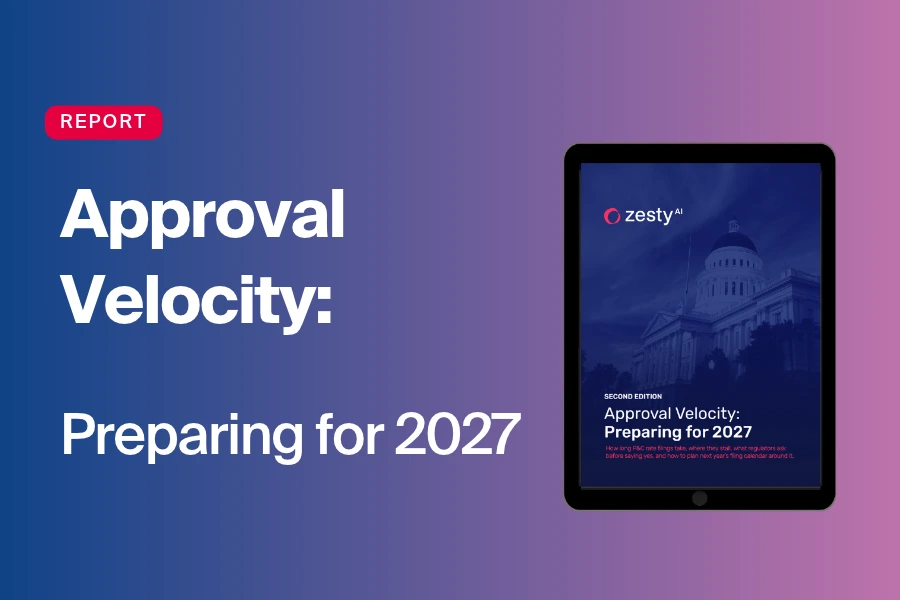
In the second edition of Approval Velocity: Preparing for 2027, ZestyAI analyzed 19,143 approved rate filings across homeowners, personal auto, and commercial property insurance in all 50 states and the District of Columbia, covering October 1, 2025, through September 30, 2026.
Conducted using ZORRO Discover™, ZestyAI's agentic AI platform for competitive and regulatory intelligence, the research goes beyond benchmarking approval timelines to examine the objection letters themselves, revealing what regulators repeatedly ask carriers to address before granting approval.
How Long Does It Take to Get an Insurance Rate Filing Approved?
ZestyAI's research found median rate filing approval times of 27 days for homeowners, 25 days for personal auto, and 15 days for commercial property insurance.
These national figures, however, mask substantial differences between states. In homeowners insurance alone, median approval times range from same-day approval in Wisconsin to 222 days in California.
Many of the fastest and slowest states remain consistent across all three lines of business and both editions of the research. For carriers managing multi-state filing calendars, this consistency makes historical approval benchmarks a useful tool for sequencing submissions and setting realistic effective dates.
What Impact Do Regulatory Objections Have on Insurance Rate Filing Timelines?
Across the 19,143 approved rate filings analyzed, 45% received at least one formal regulatory objection, up from 44% in the May 2026 edition of the report. Filings that received an objection took a median of 38 additional days to gain approval compared with those that did not.
Homeowners insurance remains the most contested of the three lines studied. The median approval time for homeowners rate filings without an objection was eight days, compared with 57 days for those that received one.
The findings underscore the importance of accounting for potential objections when planning rate implementations, particularly in states where regulatory review cycles are already lengthy.
Are Larger Insurance Rate Increases More Likely to Draw Regulatory Objections?
Across all three lines of business, ZestyAI's analysis found that the frequency of regulatory objections increased with the magnitude of the approved rate increase.
In homeowners insurance, 72% of approved rate filings with increases above 10% received an objection, compared with 55% of those with increases below 5%.
For carriers entering 2027 with outstanding rate needs, the relationship between rate change magnitude and regulatory scrutiny has direct implications for filing preparation, resource allocation, and implementation timelines.
How Can Insurers Reduce Rate Filing Approval Delays?
Not every regulatory objection reflects a disagreement over rates or actuarial methodology. ZestyAI's analysis of objection letters reveals that many recurring requests relate to procedural requirements, including missing state-specific exhibits, incomplete documentation, and inconsistencies in filing submissions.
These findings reinforce a theme explored in ZestyAI's webinar, Becoming Approval-Ready: How Carriers and Regulators Can Accelerate Filings: the opportunity to reduce avoidable delays through better preparation and a clearer understanding of regulatory expectations.
For actuarial, product, and regulatory teams, incorporating competitive and regulatory intelligence earlier in the filing process can help identify recurring regulator concerns, anticipate state-specific requirements, and address potential objections before submission.
Download the Full Research Report
Which states consistently take the longest to approve rate filings? What are regulators repeatedly asking carriers to address? And how should insurers sequence their 2027 filings to account for regulatory scrutiny?
The second edition of Approval Velocity provides detailed state-by-state approval benchmarks, comparisons with the May 2026 edition, an analysis of recurring objection themes, and practical recommendations for insurers preparing their 2027 filing calendars.