
Reports & Research
Explore proprietary research packed with data, insights, and real-world findings to help carriers make smarter decisions.
.png)

Wildfire Risk Across the Nation
We’ve created a visual guide to where wildfire risk is rising—and where opportunities for mitigation exist.
Wildfire Risk Is Rising Nationwide
Wildfire seasons are getting longer, more destructive, and harder to predict—and they’re no longer just a Western U.S. concern. From the Southeast to the Midwest, wildfire risk is emerging in places many insurers haven’t traditionally watched.
What the Latest Data Reveals About Wildfire Exposure
Drawing from the latest national datasets and insights from ZestyAI’s Z-FIRE™ model, this visual guide to wildfire risk in the U.S. shows:
- New wildfire hotspots: Discover where risk is rising fastest.
- Mitigation gaps: Learn how a lack of defensible space is putting thousands of homes in danger across the country.
- Top risk drivers: See how features like overhanging trees and wooden roofs are fueling destruction in high-risk areas.
BONUS: You’ll also get access to our latest online event with IBHS and Western Fire Chiefs Association, The LA Fires in Focus: What Worked, What Didn’t, What’s Next for Insurers.
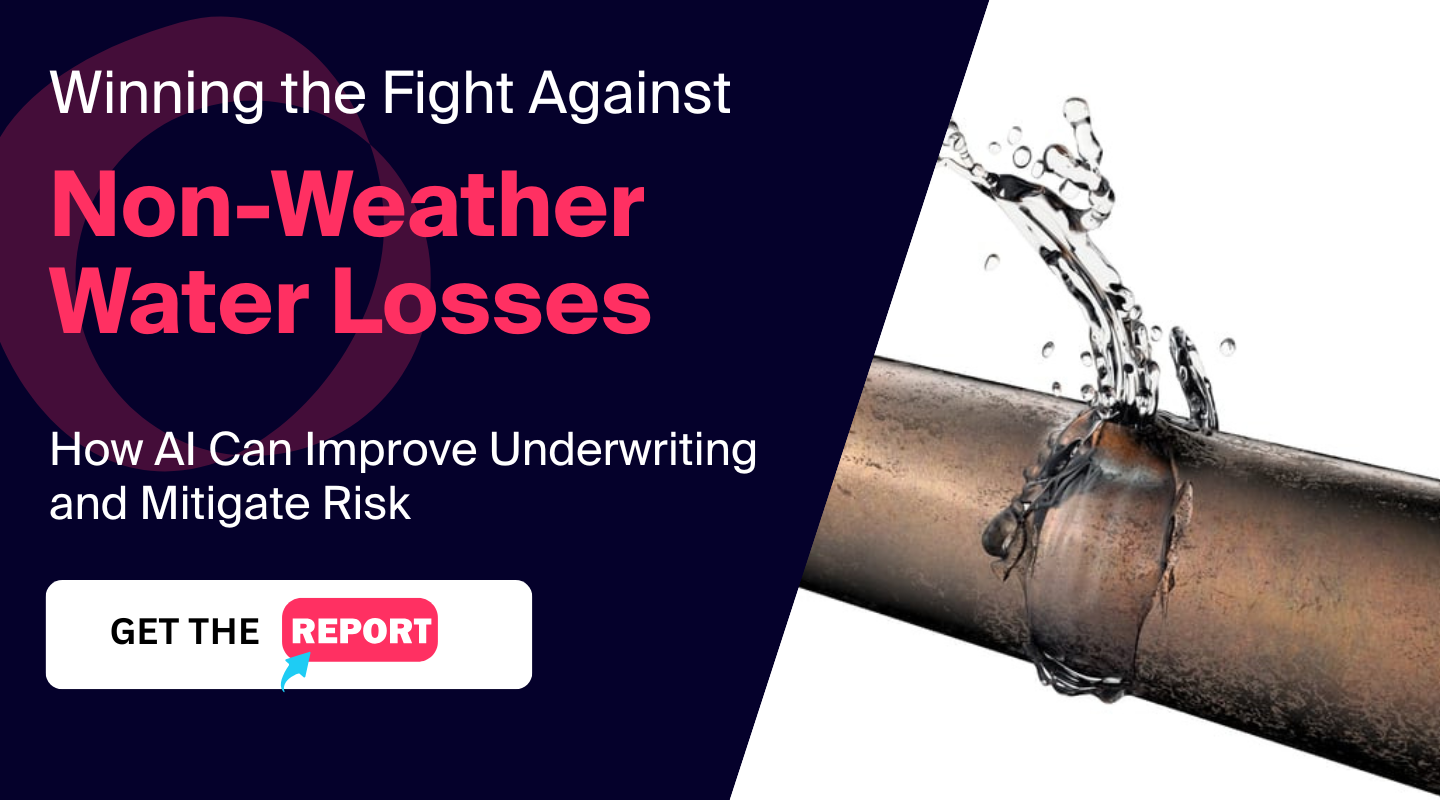
Why Non-Weather Water Losses Are Quietly Eroding Profitability
New research reveals how insurers can rethink their strategy for the 4th costliest peril in homeowners insurance
The Silent Peril Reshaping Homeowners Insurance
Non-weather water damage rarely makes headlines, but it’s quietly eroding profitability across the country.
It is now the fourth costliest peril in homeowners insurance, and claim severity has increased 80% in the last decade—a trend that’s accelerating even as frequency remains relatively flat.
Traditional risk models struggle to capture the early warning signs behind these losses, leading to mispriced policies, undetected exposure, and rising volatility for carriers.
Want the full analysis? Download the complete “Winning the Fight Against Non-Weather Water Losses” guide.
Why Loss Severity Keeps Rising
Aging homes and overlooked system failures
Many of the most expensive losses stem from aging plumbing, deteriorating materials, and slow-burn failures that often go undetected until damage is significant.
Frequency is flat—severity is not
Loss patterns suggest that while the number of events hasn’t surged, the financial impact of each event has—a signal that traditional models are not capturing the right property-level predictors.
The Property Features Most Predictive of Water Losses
The overlooked attributes that traditional models miss
Standard territory- or age-based assessments often ignore the property-specific details that meaningfully influence water loss risk, including:
- supply line material and age
- plumbing configuration
- occupancy patterns
- system maintenance and upgrades
- moisture exposure and prior loss indicators
These factors vary widely between neighboring homes—yet most models treat them as identical.
Where Traditional Underwriting Falls Short
ZIP-code and age-based proxies mask true risk
Legacy approaches rely heavily on broad territory-level assumptions that overlook structural vulnerabilities and system conditions.
Limited visibility creates mispriced policies
Without property-level insight, high-risk homes are often underpriced while lower-risk homes subsidize them—driving loss ratio volatility over time.
Get deeper insights on the drivers of water loss severity in our full guide → “Winning the Fight Against Non-Weather Water Losses”
How AI and Property-Level Data Are Changing the Landscape
AI models trained on real-world claims data can identify early signals of potential water loss by analyzing the interaction between:
- plumbing systems
- property attributes
- historical patterns
- material degradation
- repair history
This enables carriers to segment risk accurately, adjust pricing, and reduce preventable losses—long before small issues turn into major claims.
What Homeowners Actually Understand About Water Risk
Misconceptions around coverage and prevention
ZestyAI’s research shows that many policyholders:
- misunderstand what is and isn’t covered
- underestimate how much damage water can cause
- rarely take preventive actions unless prompted
This disconnect creates an opportunity for carriers to strengthen education, mitigation, and customer engagement.
Steps Carriers Can Take Today
Improve segmentation and rating accuracy
Property-level signals enable more precise risk tiers and more stable long-term portfolios.
Strengthen mitigation and reduce loss severity
Insights help identify which homes are at elevated risk and where targeted mitigation can reduce exposure.
Enhance underwriting workflows with explainable insights
Transparent, explainable AI helps underwriters understand the key drivers behind elevated risk—supporting both decision-making and regulatory review.
Get the Full Guide
Our new research paper, Winning the Fight Against Non-Weather Water Losses, breaks down the trends reshaping this growing peril—and the strategies carriers can use to get ahead of it.
Access the Guide
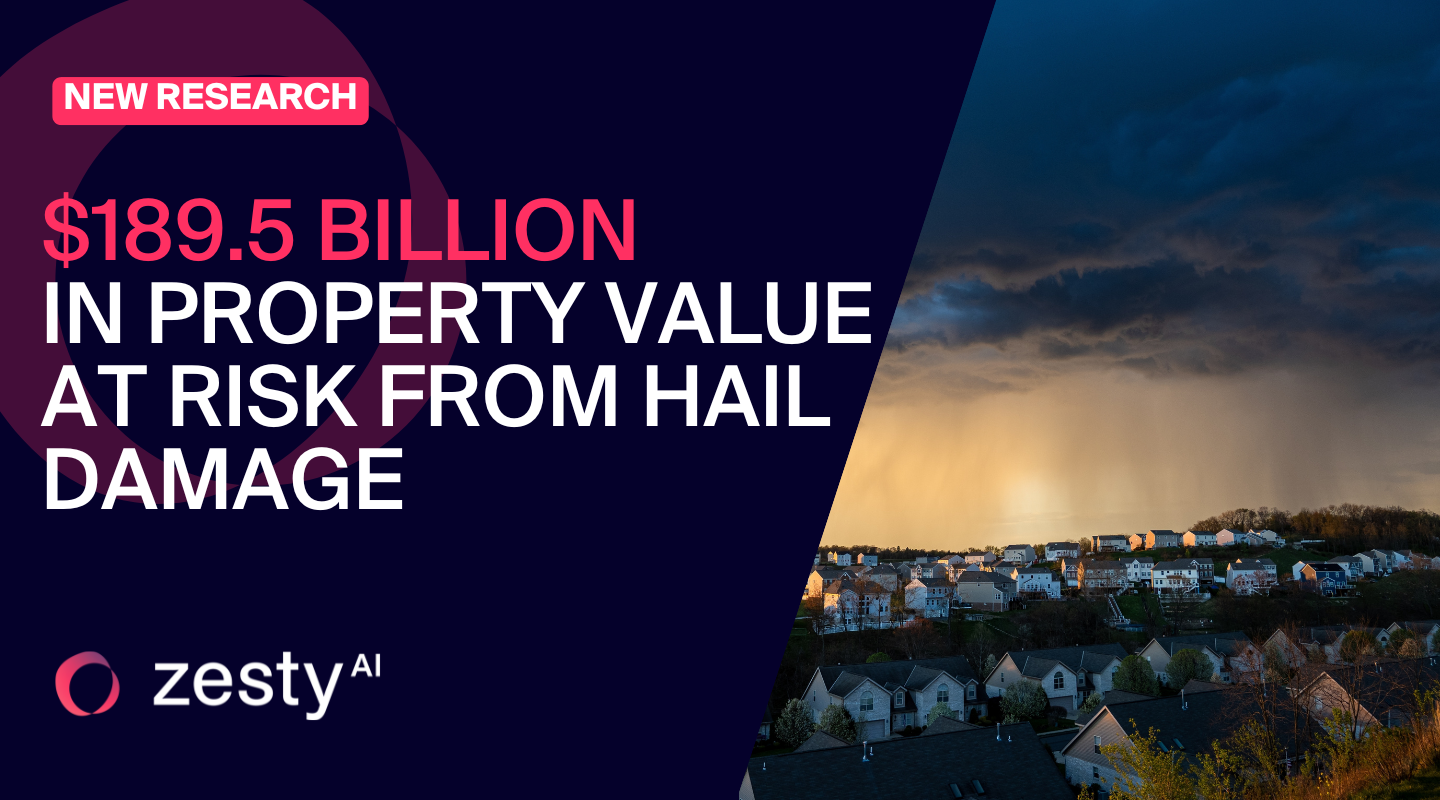
12.6 million US properties at high risk from hail damage
ZestyAI analysis reveals $189.5 billion in potential hail losses.
ZestyAI's analysis revealed that more than 12.6 million U.S. properties are at high risk of hail-related roof damage, representing $189.5 billion in potential replacement costs.
Powered by ZestyAI’s Z-HAIL™ model, the analysis underscores the growing financial threat of severe convective storms (SCS), including hail, tornadoes, and wind events. In 2024 alone, damages from SCS were estimated at $56 billion—surpassing losses from hurricanes.
Yet many insurers still rely on traditional models designed to estimate portfolio-level exposure, not property-level risk. As hail events increase in severity and frequency, these models often miss the structural and environmental conditions that drive real losses.
Kumar Dhuvur, Co-Founder and Chief Product Officer at ZestyAI said:
“Catastrophe models have helped insurers understand where storms may strike and how losses might add up at a portfolio level. But they weren’t built to assess risk at the individual property level, and they often miss the specific conditions that drive hail damage. By analyzing the interaction between structure-specific features and local storm patterns, we can distinguish risk between neighboring properties—enabling smarter underwriting, more precise pricing, and better protection for policyholders.”
Z-HAIL evaluates hail risk using a proprietary blend of climate, aerial, and property-specific data. By applying advanced machine learning to these inputs, Z-HAIL delivers highly granular predictions that reflect both the physical characteristics of a structure and the storm activity in its immediate surroundings.
Key findings from the analysis:
- 12.6 million U.S. structures flagged as high risk for hail-related roof damage
- $189.5 billion in total potential roof replacement exposure
Top five states by dollar exposure:
- Texas ($68B)
- Colorado ($16.7B)
- Illinois ($10.8B)
- North Carolina ($10.4B)
- Missouri ($9.5B)
States with the lowest dollar exposure:
- Maine ($4.7M)
- Idaho ($12.8M)
- New Hampshire ($18.5M)
- Nevada ($49.3M)
- Vermont ($64.7M)
In recent case studies, Z-HAIL has demonstrated the ability to pinpoint which properties are most susceptible to hail damage—even within the same neighborhood and exposed to the same storm. In one example from Allen, Texas, following a storm with 2.5-inch hailstones, Z-HAIL segmented risk across 483 policies, identifying no losses among properties rated “Very Low” by the model. This level of intra-territory precision gives insurers the ability to refine risk selection with confidence—even in the most hail-prone regions of the country.
.png)
2025 Storm Risk Webinar Now Available On Demand
Stream our webinar for a preview of severe convective storm risk in 2025 and see how AI-driven insights can help you stay prepared.
Severe convective storms are becoming more frequent and costly, putting pressure on insurers to refine underwriting and risk management strategies.
On April 2, our experts covered:
- Key drivers behind increasing severe storm losses
- What La Niña means for the 2025 season
- How AI-powered risk models improve risk segmentation
- Live Q&A – Get expert answers to your toughest questions!
Missed the live event? Stream now!

Report: Severe Convective Storm Preview 2025
Get the insights to manage risk in 2025 before claims surge.
Severe convective storms (SCS)—including tornadoes, hail, and damaging wind events—resulted in $58 billion in insured losses across the U.S in 2024.
Insurers face a dual challenge: navigating the uncertainty of storm patterns while ensuring their portfolios remain resilient enough to absorb the financial strain from clustered, high-loss events.
Research with IBHS confirms that SCS damage accumulates over time, particularly affecting rooftops after multiple exposures to intense storm activity. As housing stock deteriorates, insurers must reassess their portfolios to ensure underwriting, rating, and loss cost controls align with their risk appetite and maintain premiums that accurately reflect evolving exposure.
Get ahead of rising storm risks with expert insights that help you strengthen underwriting, risk assessment, and claims management.
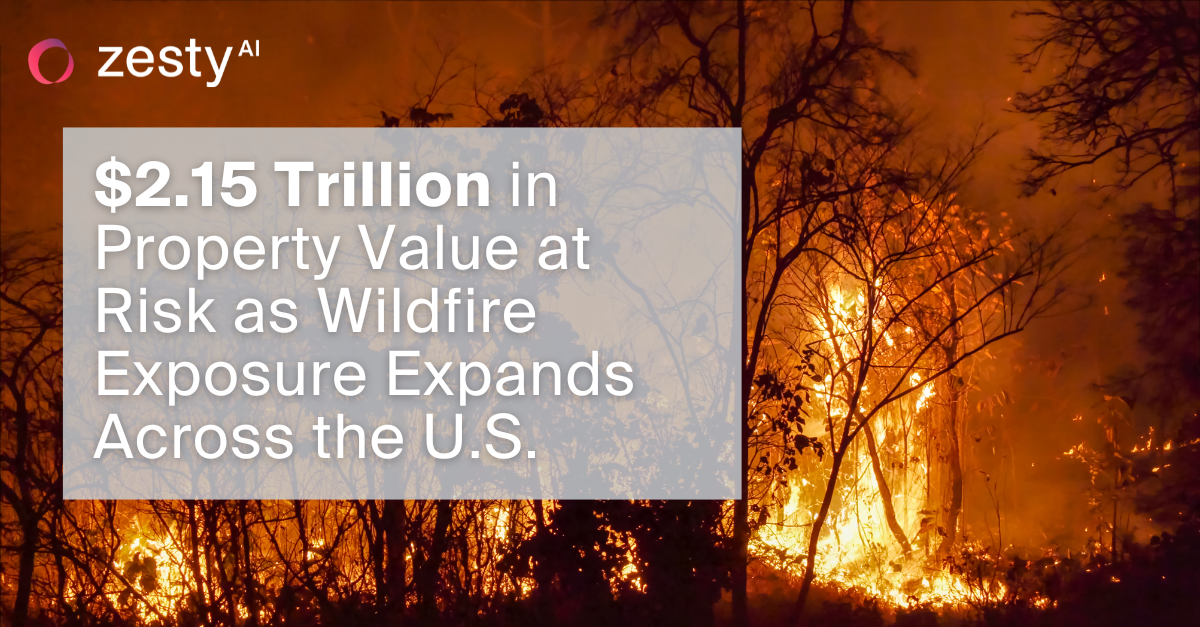
$2.15 Trillion in Property Value at Risk as Wildfire Exposure Expands Across the U.S.
ZestyAI Identifies 4.3 Million U.S. Homes with High Wildfire Risk.
A staggering $2.15 trillion worth of U.S. residential property is at high risk of wildfire damage, according to a new AI-powered analysis from ZestyAI, the leader in climate and property risk analytics. The study, which assessed 126 million properties nationwide, found that 4.3 million individual homes face heightened wildfire risk—far beyond traditionally recognized high-risk areas.
Using advanced AI models trained on over 2,000 historical wildfires, ZestyAI mapped wildfire exposure at the property level, integrating satellite and aerial imagery, topography, and structure-specific characteristics. While California leads the nation with $1.16 trillion in wildfire-exposed property, other states such as Colorado ($190.5 billion), Utah ($100.3 billion), and North Carolina ($71.2 billion) also face significant risk.
Wildfire Risk is a Nationwide Challenge
While the Western U.S. has historically seen the most severe wildfire activity, ZestyAI’s findings confirm that high-risk properties exist across the country. States like North Carolina (4.6% of homes at high risk), Kentucky (2.9%), Tennessee (2.3%), and even South Dakota (11.0%) are now seeing increased wildfire exposure.
As more homes and businesses are built in fire-prone landscapes, the Wildland-Urban Interface (WUI) continues to expand. This, combined with intensifying climate conditions, is driving higher insurance costs and growing availability concerns. Today, one in eight U.S. homeowners already lacks adequate insurance coverage, and that number is expected to rise.
AI Expands Insurance Access in High-Risk Areas
Attila Toth, Founder and CEO of ZestyAI said:
"Wildfires are threatening more properties than ever before, with billions of dollars in exposure even in areas many people don’t associate with fire risk. Yet, too many homeowners are finding themselves uninsured or underinsured just as these disasters become more frequent and severe. Insurers have traditionally relied on broad, regional models that don’t account for individual property characteristics."
"That means some homeowners are denied coverage even when their true risk is much lower than their neighbors'.’"
AI-driven risk analytics are reshaping the way insurers assess wildfire exposure. By providing granular, property-specific insights, we’re helping insurers make smarter underwriting decisions—keeping coverage available in high-risk areas while ensuring that homeowners who take mitigation steps are recognized.
Last year, our models helped insurers extend coverage to 511,000 properties that had previously struggled to secure insurance due to outdated risk models. In 2025, we expect that number to reach a million, ensuring that even in high-risk areas, responsible homeowners have access to protection when disaster strikes.
.webp)
Applied Home National Underwriters Selects ZestyAI’s Platform to Power Property Risk Analytics
Insurer adopts AI-driven models for non-weather water, hail, wind, and wildfire risks
ZestyAI today announced a new partnership with Applied Home National Underwriters to adopt ZestyAI’s full suite of regulatory-approved models and property insights in support of more accurate underwriting, pricing, and portfolio management across its U.S. property insurance operations.
This includes peril-specific models for non-weather water (Z-Water™), wildfire (Z-Fire™), hail (Z-Hail™), wind (Z-Wind™), and severe convective storm (Z-Storm™). It also includes property insights that combine aerial imagery, building permits, and parcel-level data to identify risk-relevant features such as roof condition, vegetation overhang, and secondary structures.
ZestyAI’s models use proprietary AI trained on billions of data points, including aerial imagery, parcel-level attributes, building permits, climatology, and real-world loss data, to deliver precise, property-specific risk intelligence that supports confident risk selection, loss ratio improvement, and more robust concentration management across perils.
Brian Voorhees, Chief Operating Officer, Applied Home National Underwriters, said:
“ZestyAI’s AI-powered risk models offer the kind of granular, verified intelligence that strengthens risk evaluation across a broad spectrum of perils, from climate-related threats to non-weather water.”
“This partnership deepens our commitment to innovation and precision in underwriting and portfolio management.”
“Applied Home National Underwriters is known for taking on complex risks with clarity and conviction,” said Attila Toth, Founder and CEO of ZestyAI. “We’re proud to support that with trusted, property-specific insights that help sharpen underwriting, align pricing with true risk, and strengthen portfolio performance.”

The Roof Age Blind Spot in P&C Insurance
Roof age is a powerful predictors of property risk, yet insurers continue to rely on self-reported data that is often wrong. Our analysis uncovers just how costly that blind spot can be.
In property insurance, roof age is one of the most critical factors in assessing risk. Yet too often, carriers rely on self-reported or agent-supplied data that is incomplete or inaccurate.
ZestyAI’s recent analysis of 500,000+ properties revealed widespread discrepancies in reported roof age. The result? Mispriced policies, unexpected losses, and operational inefficiencies that impact the bottom line.
As climate volatility grows and reinsurance pressure intensifies, overlooking the true condition and age of a home’s largest, most exposed surface is a risk no carrier can afford.
What’s Inside
- Uncover the biggest myths and blind spots in roof age records.
- Understand why traditional data sources, like claims systems and permits, fall short in providing accurate roof age.
- Learn how a multi-source verification strategy, combining aerial imagery, permits, tax records, and AI, offers a blueprint for improvement and 97% national coverage.
- Explore why roof age is a predictor of losses across multiple perils, not just wind and hail.
- Discover the one-two punch of verified roof age and real-time condition insights, delivering a complete view of risk, even for young roofs with hidden problems.
- Align your roof age data with growing regulatory expectations, particularly in states like Florida.
Nebraska and Kansas Approve AI-Powered Storm Models from ZestyAI Amid Escalating Weather Losses
Approvals open insurer access to property-level hail and wind risk scoring, helping carriers price coverage in two of the most climate-exposed states
ZestyAI has secured regulatory approval to use its AI-powered Severe Convective Storm models in underwriting and rating in Nebraska and Kansas. The move greenlights Z-HAIL™, Z-WIND™, and Z-STORM™, for use in property-level hail and wind scoring, giving carriers more transparency and precision in two of the nation’s most storm-prone states.
2024 Loss Trends Highlight Urgency
Kansas recorded 495 major hail events (≥1 inch) in 2024, the second-highest total of any U.S. state. Nebraska saw 100 confirmed tornadoes, the most in over 20 years. According to 2024 NAIC reporting, Nebraska posted the highest loss ratio of any state at 135.74%, while Kansas ranked 13th at 67.98%, evidence of the severe financial pressures facing insurers in the region.
Why Property-Level Intelligence Matters
ZestyAI’s Severe Convective Storm models analyze the interaction between localized climatology and property-specific characteristics, such as roof condition, design, and complexity, to predict the likelihood and severity of hail, wind, and storm damage claims. In contrast, many models still rely on broad ZIP code or territory-level risk assessments, missing critical property-level signals.
Each model is trained and validated on extensive real-world claims data and provides clear, transparent explanations of the key factors driving each score, enabling more confident underwriting and rating decisions.
Capabilities of the ZestyAI SCS Suite
- Z-HAIL: Predicts hail damage risk and claim severity using property-specific attributes such as roof complexity and accumulated damage to identify which homes are most likely to file a claim, even within the same neighborhood.
- Z-WIND: Analyzes AI-generated 3D roof condition, complexity, and potential failure points alongside local climatology to deliver pivotal insights into property-specific wind claim vulnerability and severity.
- Z-STORM: Assesses the frequency and severity of storm damage claims, including hail and wind, examining the interaction between climatology and the unique characteristics of every structure and roof.
“Securing approval in the storm epicenter of the U.S. reflects both the transparency of our models and our alignment with rigorous regulatory standards,” said Bryan Rehor, Director of Regulatory Affairs at ZestyAI.
“It gives carriers the confidence to use precise, property-level hail and wind insights where they’re needed most, supporting risk-aligned underwriting and pricing in markets facing escalating storm losses.”
ZestyAI’s Severe Convective Storm models are now approved for use in over 20 states across the Great Plains, Midwest, and U.S. South—regions most impacted by hail, wind, and tornado losses.

VYRD Selects ZestyAI to Bring AI-Powered Risk Analytics to Florida Homeowners Portfolio
Property-level insights reduce hurricane-related losses, improve risk selection, and support exposure management at scale
VYRD, a Florida-based homeowners insurance company focused on delivering stability and protection in a challenging coastal market, has partnered with ZestyAI, the leading provider of AI-powered property risk analytics, to gain deeper visibility into property condition and risk exposure across its book of business.
By leveraging the ZestyAI platform, VYRD gains access to advanced risk insights that help identify vulnerabilities contributing to hurricane-related losses, such as roof degradation, overhanging vegetation, and yard debris. These insights support more accurate underwriting, proactive portfolio management, and better visibility into changing property conditions over time.
VYRD is using two core capabilities of Z-PROPERTY: Digital Roof applies AI to high-resolution aerial imagery to assess roof complexity, materials, and condition, highlighting structural vulnerabilities before they become claims. Location Insights evaluates the broader parcel, surfacing risk factors like vegetation overhang, yard debris, and secondary structures that can amplify storm losses or drive claims severity.
“Staying ahead of risk requires strong partnerships and smarter data,” said David Howard, President and CEO of VYRD.
“ZestyAI’s ability to deliver timely, property-level insights helps us strengthen our understanding of exposure across the homes we protect and continue delivering on our promise of dependable coverage for Florida policyholders.”
Z-PROPERTY helps VYRD assess properties at scale, surface emerging risk patterns, and make more informed decisions across the policy lifecycle. This partnership extends VYRD’s tech-forward, policyholder-first strategy—using trusted data not just at point-of-quote, but throughout ongoing portfolio management.
“Florida is one of the most unforgiving insurance markets in the country,” said Attila Toth, Founder and CEO of ZestyAI. “VYRD is taking a proactive, data-driven approach—using AI to uncover hidden property-level vulnerabilities, strengthen portfolio decisions, and build resilience where it matters most.”

From High Risk to High Confidence: How One Carrier Is Rewriting the Rules of Rural Underwriting
In wildfire- and hail-prone regions, underwriting manufactured homes demands more than rules and redlines. It requires precision.
Property insurers are under growing pressure to do more with less. The risks are increasing, regulatory expectations are rising, and the margin for error keeps shrinking. In regions where wildfire, hail, and wind are intensifying, the question becomes even more urgent: how can carriers continue writing business in high-exposure areas while managing loss ratios and navigating compliance?
The challenge becomes even more complex when the homes involved are in remote locations. These properties are often far from city infrastructure, difficult to inspect, and lack consistent, structured data. That’s the reality one regional carrier faced.
Their book included thousands of rural properties, many of them manufactured homes on private land across states like Texas, Arizona, and New Mexico, as well as other regions they serve nationwide. Each presented its own underwriting hurdles, from ambiguous fire protection data to increased storm exposure and aging roof systems.
To remain active in these areas and grow responsibly, the team knew they needed a more precise way to evaluate risk at the individual property level. Broad rules were no longer enough, and legacy models designed for urban density offered little support.
The Manufactured Home Challenge: Rural, Exposed, and Hard to Inspect
Standard Casualty has specialized in insuring manufactured and modular homes for decades, serving policyholders across a wide range of states, including Texas, Arizona, and New Mexico. It’s a segment that brings unique challenges, particularly when it comes to visibility and data.
“Many of the properties we insure are located in rural areas with little to no street-level data,” said Rick Smith, Underwriting Manager at Standard Casualty.
“Some are difficult to geocode. Others are so remote that a physical on-site inspection can be challenging or expensive.”
In states like Arizona and New Mexico, many homes fall within or near the wildland-urban interface (WUI), where wildfire exposure is increasing. In Texas, hail and wind are persistent threats. And across all markets, aging structures and outdated roof data complicate rating and eligibility decisions.
The team recognized they couldn’t rely solely on fire zones or broad peril maps. They needed more nuanced, property-specific data to support confident decision-making at scale.
Getting the Full Picture, Even Without a Site Visit
“One of the big innovations for us is the availability of aerial photography,” Smith explained. “We’re seeing a lot more of our risks located in remote areas. They’re either very difficult to find or it’s very expensive to do an on-site inspection. Aerial photography really solves that problem for us.”
Using ZestyAI’s platform, the team now accesses high-resolution aerial and oblique imagery, property-specific peril scores, and roof condition insights, without always requiring physical inspections.
ZestyAI works with all the major aerial imagery providers, giving underwriters access to a broader range of coverage and more recent images than any single source could offer. That means more properties are visible, more clearly, and more often.
“We can actually accomplish through aerial photography what we can do through an on-site inspection, at a fraction of the cost, which is really important for us."
If a structure is misidentified or not aligned, underwriters can reposition the property tag themselves.
“With the ZestyAI platform, it’s very easy."
We can simply move the identifier tag with our mouse onto the correct building, click a button, and it automatically reruns the scoring and the evaluation,” Smith said.
Aerial views also improve their ability to assess roof condition and wildfire vulnerability. “Sometimes the current photo may have been taken late in the day, and there are shadows on the roof. We can back up to a photo taken six months earlier and get a clearer picture of what’s going on.”
Risk Differentiation at the Parcel Level
ZestyAI’s approach stood out by combining hazard probability with structure-specific vulnerability.
“For every peril — wildfire, hail, or wind — we now get two things,” said Smith. “First, the probability of the event occurring at that location. Second, the expected severity if it does."
"That allows us to say: these two homes are in the same neighborhood, but only one is truly high-risk.”
This dual scoring model, based on climate science and property characteristics, allows the team to evaluate each property on its own merits. “That kind of granularity is really a game changer for us in terms of underwriting,” Smith added.
Beyond Underwriting: A New Frontier in Rating and Renewal
ZestyAI’s insights also support dynamic pricing and renewals. Rather than relying on static or annual updates, risk scores adjust continuously based on the most recent information available — from new aerial imagery and roof condition changes to building permits and property improvements.
“We’re not just using the model once and forgetting it,” Smith said. “The scoring gets augmented, and as a result, the premium gets augmented as well. That means our pricing reflects current risk — not just what we assumed at inception.”
Because the models are approved for use in both underwriting and pricing, Standard Casualty can incorporate granular risk insights into its rating approach, streamlining the process of keeping rates aligned with actual conditions.
“It would take months of actuarial and analytical work to try to get to that level of granularity. And this is happening instantaneously as we renew our business.”
Retention Through Mitigation: A Smarter Approach to Non-Renewals
While many insurers are pulling back or issuing non-renewals in high-peril regions, Standard Casualty has taken a different approach: empowering policyholders to reduce their risk and stay insured.
“We can run the property eight months ahead of renewal,” Smith explained. “If we see wildfire vulnerability, we don’t just cancel. We notify the policyholder, show them what needs to change — defensible space, roof repairs, vegetation removal — and give them a chance to improve. That’s how we retain the risk and still operate responsibly.”
This proactive strategy improves retention, builds customer trust, and advances the company’s mission: improving lives by providing affordable coverage.
“This is the direction we need to go as an industry,” Smith emphasized. “We need to help policyholders understand the importance of mitigation and give them guidance so their costs — and everyone’s losses — are reduced.”
Built to Scale: Regulatory Readiness That Grows With You
One often overlooked barrier to adopting new risk models is regulatory complexity. For Standard Casualty, this was a key factor in choosing ZestyAI.
“We looked at a lot of vendors,” said Smith.
“But ZestyAI stood out because they were already approved in the states we care about and had a clear filing strategy for others.”
That alignment means the team can expand into new markets without rebuilding processes from scratch. The same tools and workflows that support Texas can be applied in Arizona, New Mexico, or future states, streamlining both operations and compliance.
“The Right Tools. The Right Decisions. The Right Time.”
As carriers navigate mounting loss pressure, tighter margins, and rising expectations from regulators and policyholders alike, Smith believes one thing will separate those who retreat from those who adapt:
“ZestyAI gives us the right tools to make the right decisions at the right time. That’s what allows us to write in places other carriers are leaving. That’s how we grow profitably, even in high-risk territories.”
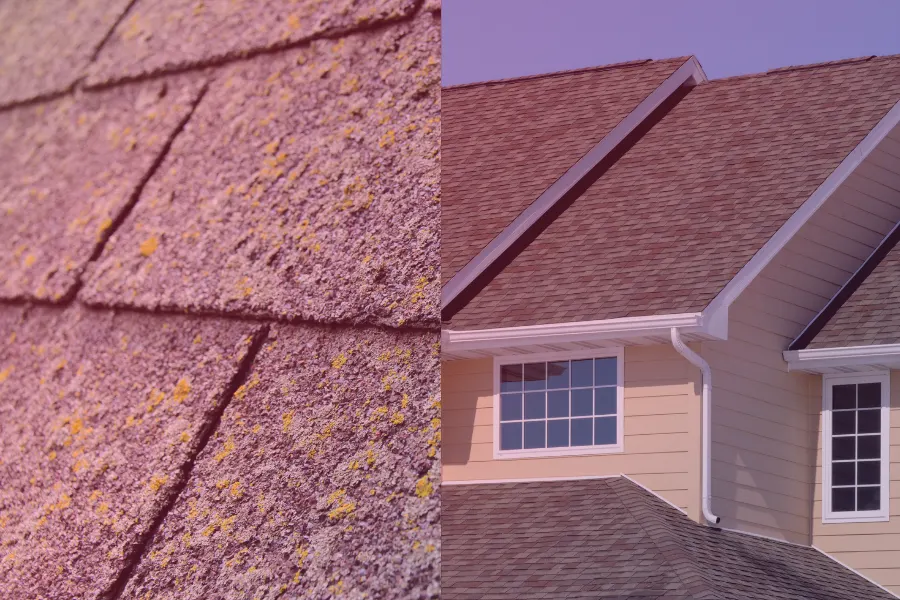
Deferred Maintenance Adds $317B in Exposure for Insurers
New research from ZestyAI reveals that 62% of U.S. homeowners are deferring critical home maintenance, adding up to $317 billion in potential claims exposure for insurers.
These findings come as Severe Convective Storms (SCS) caused an estimated $58 billion in insured losses in 2024, surpassing hurricane-related losses and marking the second-costliest SCS year on record.
Tornadoes, hail, and wind events now account for over 60% of all U.S. catastrophe claims, and research from the Insurance Institute for Business & Home Safety (IBHS) shows that roof damage accounts for up to 90% of residential catastrophe losses.
Key Findings from ZestyAI’s Homeowner Survey
According to ZestyAI’s nationally representative survey, 62% of homeowners have delayed essential repairs due to budget constraints, representing nearly 59 million U.S. homes with unaddressed vulnerabilities. Forty percent said they would rely on an insurance claim to cover major repairs like roof replacement, adding up to an estimated $317 billion in potential exposure for carriers.
Alarmingly, 63% of homeowners who weren’t living in their home at the time of the last roof replacement don’t know how old their roof is, making it even harder to detect aging systems before they fail. Meanwhile, 12% admitted they would delay repairs indefinitely, further increasing their risk of property damage.
Severe Convective Storms: The Growing Catastrophe Risk
This blind spot compounds known risks: prior ZestyAI analysis has identified over 12.6 million U.S. properties at high risk for hail-related roof damage, representing $189.5 billion in potential roof replacement costs.
“Deferred maintenance has long been a known risk factor, but today the stakes are higher than ever,” said Kumar Dhuvur, Co-Founder and Chief Product Officer of ZestyAI. "With claim severity rising and storm losses compounding, insurers need more than hazard maps to navigate this landscape."
"Property-level insights allow carriers to proactively address known vulnerabilities, improve underwriting precision, and work with homeowners to reduce losses before they happen.”
ZestyAI’s findings support a growing push toward data-driven, preventative underwriting strategies, especially as carriers face rising claim severity and pressure to improve combined ratios across storm-prone states.
See How Insights Turn Into Decisions
ZestyAI transforms data into action. Get a demo to see how the same AI powering our reports helps carriers make faster, smarter, regulator-ready decisions.