
Reports & Research
Explore proprietary research packed with data, insights, and real-world findings to help carriers make smarter decisions.
.png)

Now Streaming: Roof Risk Master Class
Effective strategies for better risk management
Are rising storm costs and inaccurate roof assessments impacting your bottom line?
Now available to stream, The Science of Roof Risk master class will equip you with the latest strategies and techniques to master roof risk assessment.
- Enhance your roof risk assessment by 60X
- Improve your combined ratio
- Reduce storm-related roof claims
- Strengthen new business selection
What we cover:
Your presenters, Ross Martin (VP, Risk Analytics) and Sam Fetchero (Head of Marketing) will share with you:
- The Problem of the Roof: Uncover the underlying factors driving rising storm losses and why traditional risk assessment methods fall short.
- The Science Behind Predicting Losses: Explore key factors impacting roof risk and loss prediction, including roof age, condition, complexity, and peril-specific models.
- Accuracy-focused Risk Models: Discover advanced modeling techniques that enhance predictive accuracy.
- Understanding Storm Climatology: Learn how storm climatology impacts roof risk and how to integrate these insights into your risk assessment strategies.
- Real-World Results: Witness a comparative analysis of these predictive factors using actual carrier data. Understand the strengths and weaknesses of each approach.
- Priorities of Leading P&C Insurers:
See what your peers asked with valuable insights to take back to your team.
Who Should Watch?
This video is ideal for Executives, Product Managers, Actuaries, Underwriters, and CAT Modelers committed to enhancing their roof risk assessment capabilities.
Bonus Guide
As a bonus for watching, you'll receive a downloadable study on the latest roof risk assessment strategies: Preparing for the Storm: The Insurers Guide to Roof Risk.
Access Now
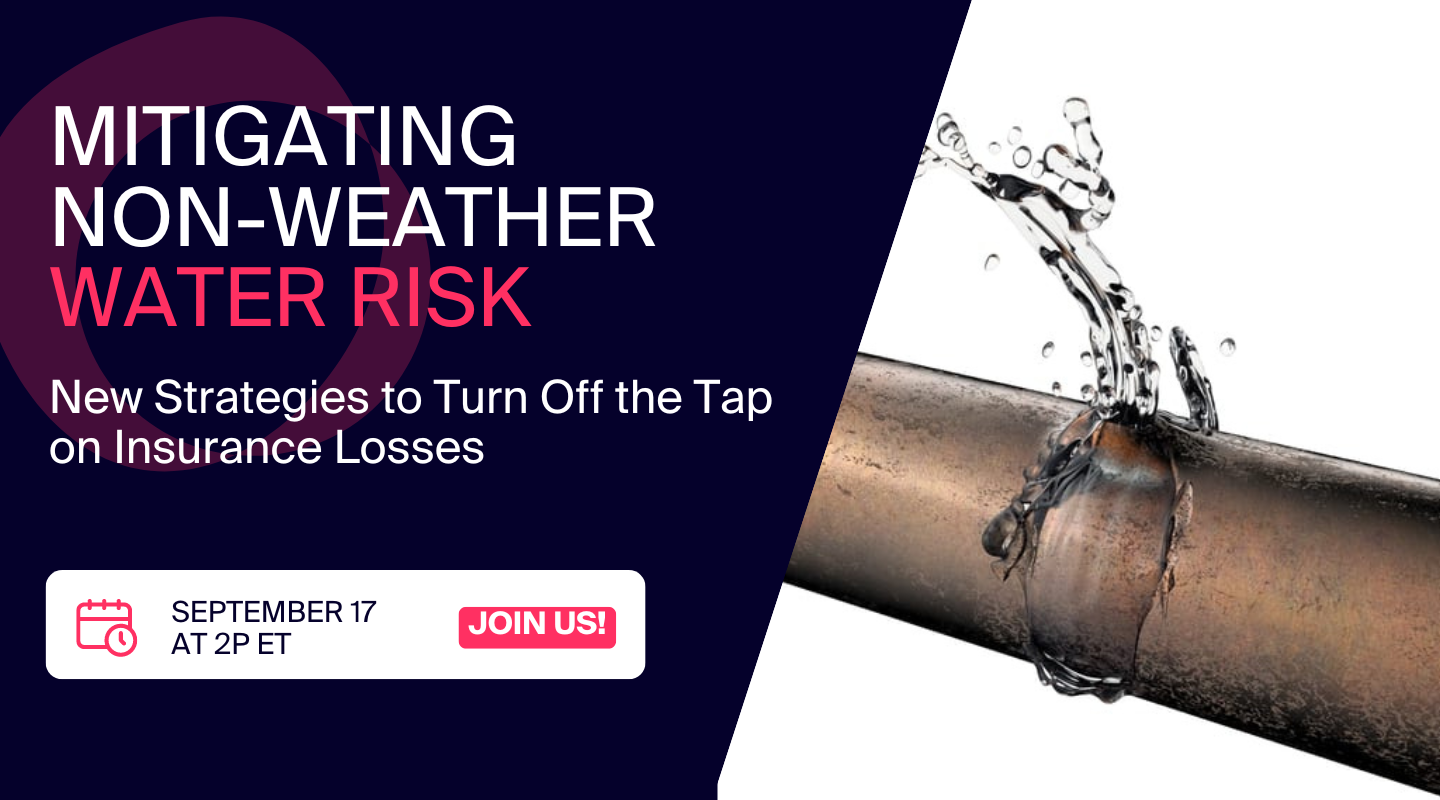
Exclusive Webinar: Mitigating Non-Weather Water Risk
New strategies to turn off the tap on insurance losses
From Costly Water Losses to Millions in Savings
Non-weather water claims are a leading cause of property insurance losses, costing insurers over $20 billion annually.
Join us for a FREE live webinar where our experts will discuss the latest trends, challenges, and insights to help you mitigate non-weather water risk.
What We'll Cover
Our experts Rob Silva, ACAS (Director of Customer Success) & Sam Fetchero (Head of Marketing) will present:
- Current Trends: Understand the rise in severity and total loss costs of non-weather water claims.
- Risk Assessment Challenges: Learn why traditional methods fall short in assessing non-weather water vulnerability.
- Key Risk Factors: Identify the main drivers of non-weather water damage.
- Strategic Insights: Discover strategies to improve your management of non-weather water claims.
- Z-WATER in Action: Experience our new AI-powered model that predicts non-weather water risk with unparalleled accuracy.
- Interactive Q&A: Get your questions answered by our experts.
Who Should Attend
This webinar is ideal for Executives, Product Managers, Actuaries, Underwriters, and CAT Modelers committed to enhancing their understanding and management of non-weather water risks.
Bonus Content
As a bonus, you'll receive our exclusive infographic, "Below the Surface: Research Reveals Knowledge Gap in Homeowner Water Loss Prevention and Coverage."
This research gives key insights into water loss experiences, coverage details, homeowner protection measures, and information on water shutoff devices and heater conditions.
Register Now
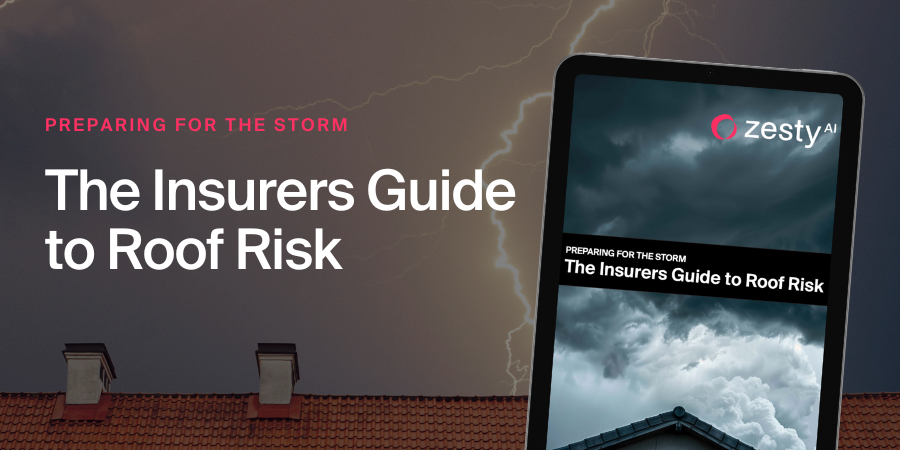
Now Available: The Insurers Guide to Roof Risk
Learn how leading insurers are mastering roof risk and maximizing lift
It’s hard to overstate how important the roof is from an insurability standpoint. The roof represents significant risks and potential opportunities, making it a critical focus area for insurers. This has become even more important in recent years as the impact of severe convective storms is often reflected in roof losses. Understanding this, ZestyAI has released new research for property insurers called The Insurers Guide to Roof Risk.
Download The Insurers Guide to Roof Risk
In an era where the severity and frequency of roof-related claims are on the rise, particularly due to the increasing impact of severe convective storms, innovative tools and strategies are essential. The Insurers Guide to Roof Risk provides actionable insights to improve risk assessment, underwriting processes, and overall business strategy.
What’s Inside the Guide?
The Insurers Guide to Roof Risk includes:
- Roof Failure Factors: Learn the underlying contributing factors behind why older roofs fail more often.
- Beyond Roof Age: Discover why roof complexity, condition, and climate are more important than roof age alone.
- Identifying Missing Risk Factors: Understand the key factors to roof risk that most traditional models miss.
- Advanced Risk Segmentation: See how using machine learning and new data sources can split risk more than 60 times better than traditional models.
- Portfolio Optimization: Access a comprehensive toolbox to optimize your portfolio and new business selection to generate exponential lift versus traditional models.
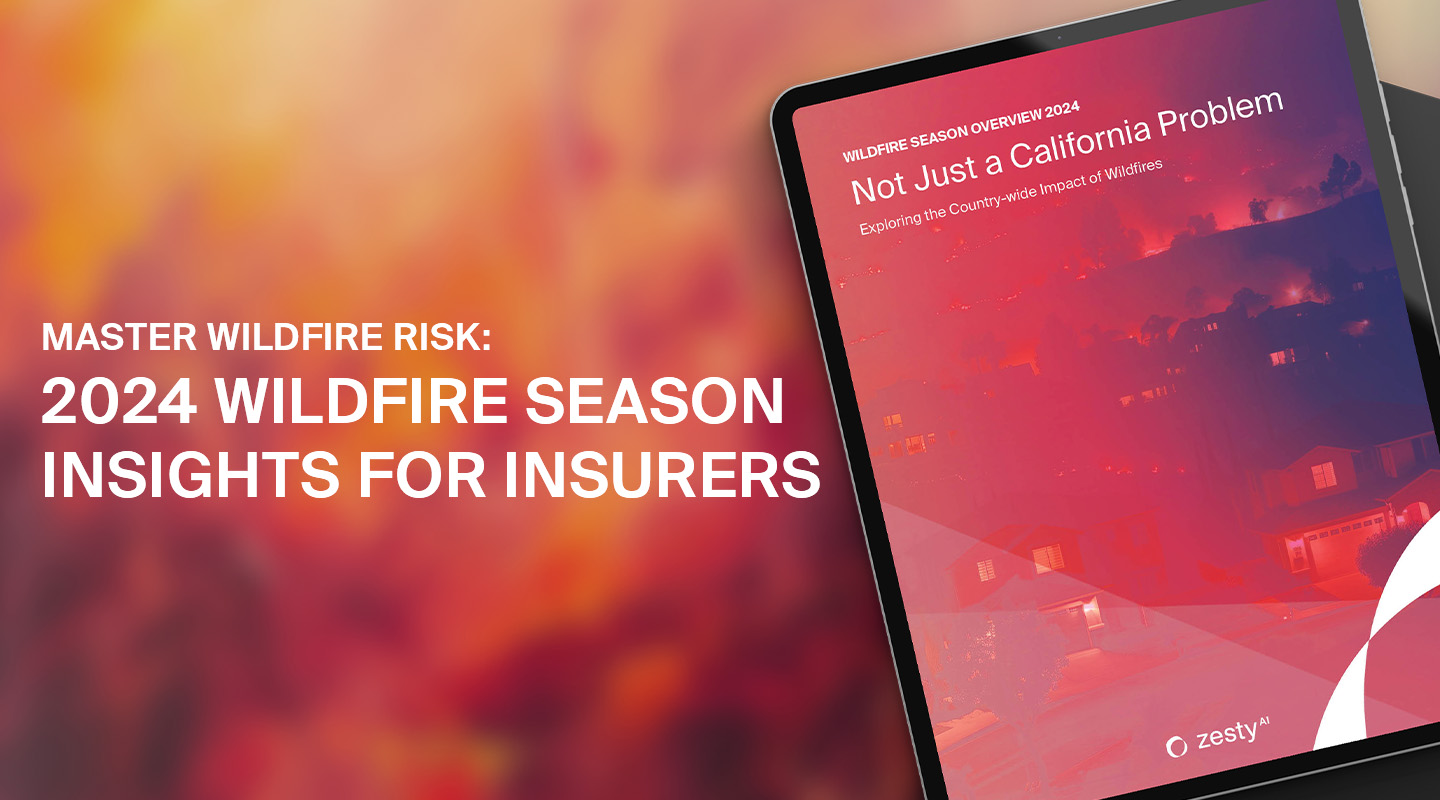
Now Available: ZestyAI’s 2024 Wildfire Season Overview
Annual Wildfire Season Overview provides insights to assist insurers in effectively managing wildfire risk.
Annual Wildfire Season Overview provides insights to assist insurers in effectively managing wildfire risk.
ZestyAI has released its annual Wildfire Season Overview for 2024. This year’s guide provides critical insights carriers need to stay ahead of the rapidly evolving wildfire landscape. Offering more than just data, this year’s guide is designed to help insurers make informed risk decisions in some of the country’s most volatile states.
Download ZestyAI's 2024 Wildfire Season Overview
This year’s guide includes:
- Countrywide Wildfire Impact Analysis: Understand how wildfires are affecting regions beyond traditional hotspots like CA, including significant events in TX & NM.
- Future Wildfire Trends: Explore predictions for the 2024 wildfire season and understand the long-term implications of current conditions on wildfire risks.
- Regulatory Insights: Stay updated on the latest regulations affecting wildfire risk assessment insurance practices.
- AI-driven Risk Models: Learn how ZestyAI's Z-FIRE model accurately predicts wildfire risks and assists insurers in making informed decisions.
- Property-Level Risk Assessments: Discover the importance of granular, property-specific risk evaluations to improve underwriting accuracy and transparency for consumers.
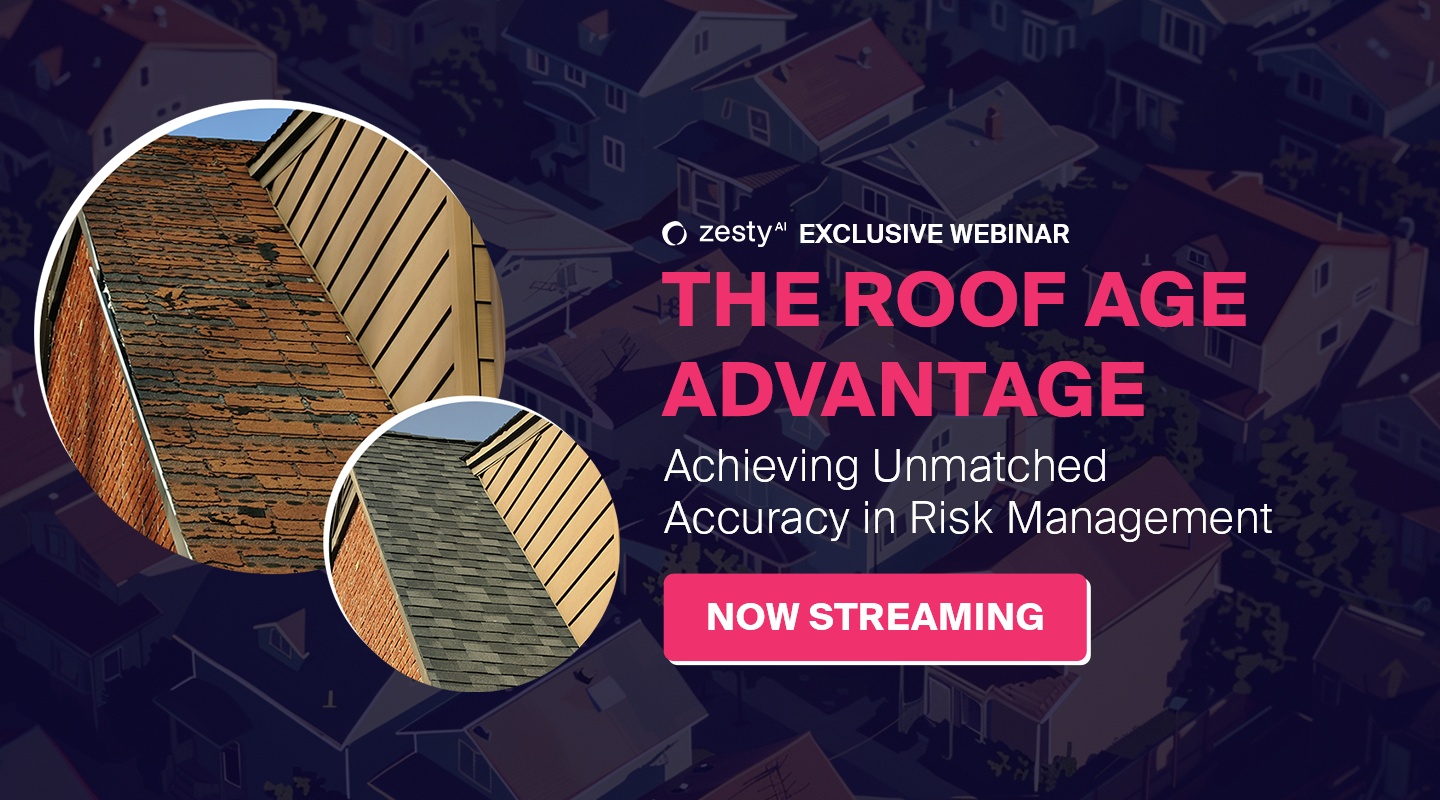
The Roof Age Advantage Webinar Now Available On Demand
Achieve unmatched accuracy in risk management
Costing insurers approximately $19 billion every year, roof claims stand as the primary driver of property insurance losses.
Traditional methods of obtaining roof age information are deeply flawed. Most carriers depend on policyholder or agent-reported data, which is often inaccurate, leading to blind spots in assessing property risk. In a recent ZestyAI survey, 63 percent of homeowners reported not knowing the age of their roof if they were not in their homes the last time it was replaced.
Join our expert panel for a deep dive into leveraging roof age analytics for a cutting-edge underwriting process and gain insider knowledge on:
- The Leading Cause of Claims: unveil the hidden truths behind roof-related claims and the costly consequences of outdated assessment methods.
- A New Era of Data: Learn about ZestyAI’s pioneering approach to roof age analytics, incorporating building permits, historical imagery, and AI for a comprehensive view
- Precision at Scale: See how to apply precise, AI-driven roof age data across your entire portfolio for consistent and reliable underwriting and claims decisions
- Technical Decision Making: Empower your actuaries and underwriters with the insights needed to enhance risk selection and optimize pricing strategies
- Efficiency in Operations: Streamline inspections and operations, focusing resources where they’re needed most, improving time-to-quote, and enriching the customer experience
- Best Practices: Learn how leading carriers are using roof age, roof condition, and peril-specific models to improve risk selection and lower combined ratios
This transformative session is available on demand. Learn how to enhance accuracy, efficiency, and profitability in property insurance.
Save Your Spot
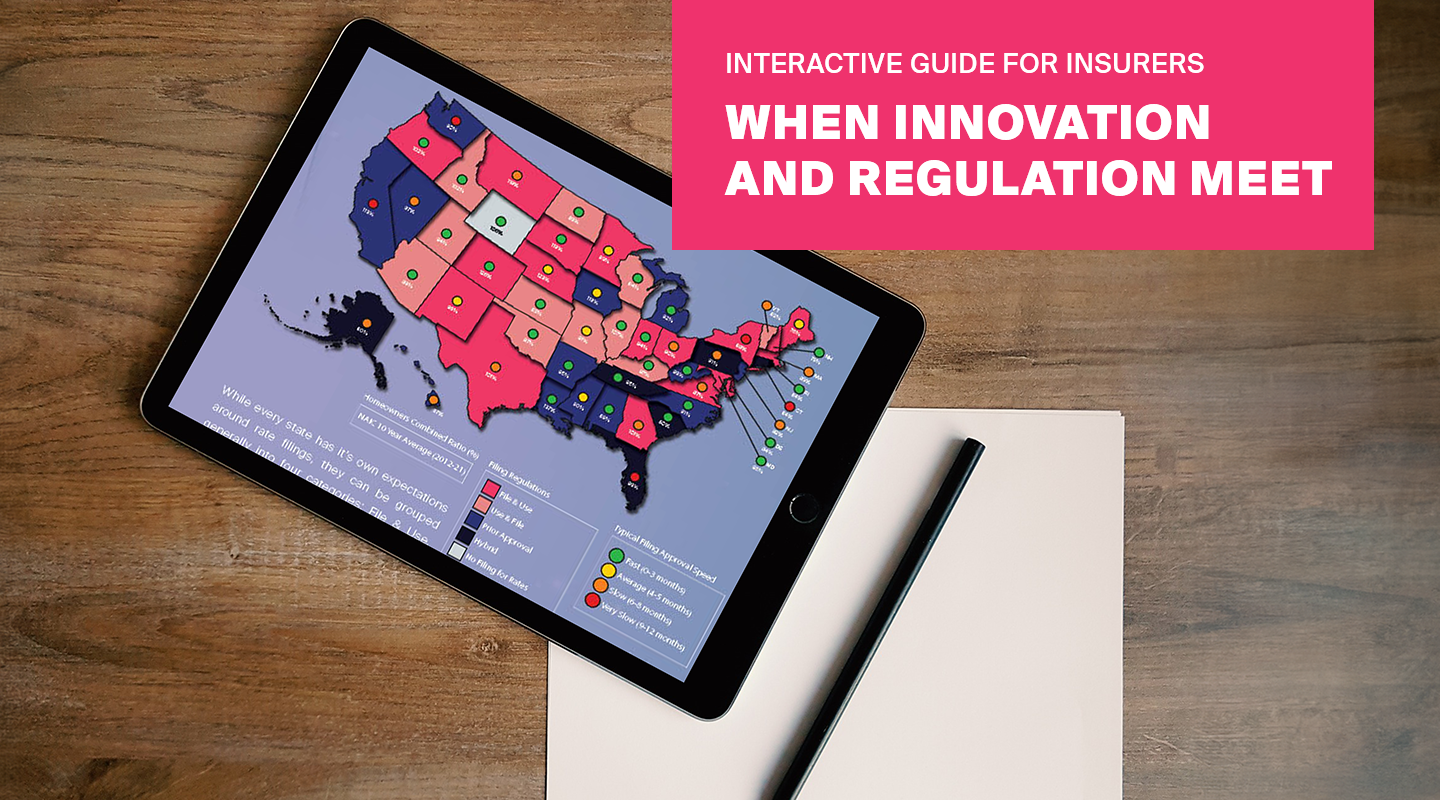
New Research: What Insurers Need to Know About AI and Regulatory Compliance
Master the future of insurance compliance with ZestyAI's interactive guide, featuring a state-by-state regulatory map, AI partnership checklist, and insights into emerging challenges.
In an ever-evolving regulatory environment, staying informed and adaptable is crucial. Our latest interactive guide, "When Innovation and Regulation Meet", offers a comprehensive toolkit for navigating the complexities of insurance compliance and the integration of AI technologies.
What's Inside?
- Regulatory Landscape Map: Delve into a detailed state-by-state analysis, uncovering the intricacies of filing laws and approval speeds.
- Staying Ahead of Regulation Changes: Learn how to stay prepared and ensure your compliance strategies are future-proof, aligning with the latest regulatory expectations.
- Essential AI Partner Checklist: Choosing the right AI partner is crucial for success. Our guide offers a meticulous checklist for selecting a partner that is not only compliant but also transparent and supportive, ensuring you make an informed decision.
- Emerging Regulatory Concerns: What do you need to know about privacy, bias, and AI oversight?
- Real-World Applications: Discover how ZestyAI's collaborative approach with regulatory entities has led to successful model approvals across the United States.
Why This Guide?
As the regulatory framework becomes increasingly complex, having a reliable and insightful resource is indispensable. Our guide is tailored for insurance professionals seeking to enhance their regulatory strategy, embrace AI innovation responsibly, and achieve a competitive edge in the market.
Ready to get up to speed on 2024's regulatory environment? Access the guide.
Universal North America Insurance Company Adopts ZestyAI’s Roof Age Solution
Partnership brings AI-powered verified roof age to strengthen risk decisions and portfolio performance
ZestyAI, the leading provider of AI-powered property and climate risk analytics, today announced that Universal North America Insurance Company, a property insurer, part of the One Alliance Group of companies, has adopted ZestyAI’s Roof Age solution to bring greater accuracy and confidence to property risk assessment across its portfolio.
Why Accurate Roof Age Data Matters
Roof-related claims are among the costliest in property insurance. Yet insurers have long struggled with inconsistent or incomplete roof age data. ZestyAI’s analysis shows that nearly one in three roofs are at least five years older than recorded in policy data, creating blind spots that drive higher losses and mispriced policies.
How ZestyAI’s Roof Age Model Works
ZestyAI’s Roof Age solution closes this gap by synthesizing building permit data with two decades of high-resolution aerial imagery, applying advanced machine learning to deliver verified roof age estimates with 97% U.S. coverage.
Strengthening Portfolio Performance
"Accurate roof data is foundational for managing one of the costliest drivers of property insurance losses,” said Miguel Barrales, President of Universal North America Insurance Company. “ZestyAI’s Roof Age solution provides the reliability we need to make more confident risk decisions and strengthen portfolio performance.”
"For years, insurers have had to make critical decisions without reliable roof data, and the cost has been enormous,” said Attila Toth, Founder and CEO of ZestyAI. “Universal North America Insurance Company’s adoption shows what’s possible when carriers embrace trusted, property-level insights to strengthen their portfolios and the market as a whole.”
ZestyAI Secures Regulatory Approval for Z-WATER™ in Wisconsin
AI-powered model addresses the #1 driver of non-catastrophic property losses, non-weather water
ZestyAI, the leading provider of AI-powered property and climate risk analytics, today announced that its non-weather water risk model, Z-WATER™, has received approval in Wisconsin for use in underwriting and rating.
Why Non-Weather Water Losses Are Rising
Non-weather water is one of the costliest and fastest-growing perils in homeowners insurance, now ranking as the fourth costliest peril overall, with claim severity up 80% over the past decade—surpassing hurricanes. These losses stem from everyday risks like burst pipes, appliance failures, and plumbing leaks. With average claim costs now exceeding $13,000, their financial impact rivals catastrophe events.
How the Z-WATER Model Works
Z-WATER is built, tested, and validated with real insurer loss data, ensuring accuracy and regulatory credibility. The model uses computer vision to analyze aerial imagery alongside tax assessor data, permit records, climatology science, and infrastructure insights to assess key property-level risk factors. By modeling how these variables interact, Z-WATER predicts both the frequency and severity of non-weather water claims with up to 18x greater accuracy than traditional models.
What This Approval Enables for Insurers
With this approval, insurers in Wisconsin can begin using Z-WATER to:
- Set more accurate, property-specific rates
- Align coverage with actual home vulnerabilities
- Optimize inspections and mitigation strategies, such as the adoption of water sensors
- Reduce cross-subsidization and improve portfolio performance
Regulatory Confidence in Explainable AI
“Non-weather water is one of the most frequent and expensive sources of loss for insurers, and it behaves differently than other perils,” said Bryan Rehor, Director of Regulatory Strategy at ZestyAI.
“Z-WATER captures the property-level features that truly drive risk—such as plumbing systems, home design, and even vegetation patterns, giving insurers a much clearer picture of where losses are likely to occur.
"This approval demonstrates that regulators recognize the value of AI models that are explainable, data-driven, and validated against real claims," he added.
Part of a Growing Nationwide Regulatory Track Record
This approval adds to ZestyAI’s growing regulatory momentum. Across five perils, including wildfire, hail, wind, storm, and now non-weather water, ZestyAI has secured more than 70 approvals coast-to-coast.
In addition to these peril models, ZestyAI’s Z-PROPERTY™ solution has also earned nationwide approvals, giving insurers trusted roof and parcel-level insights with the same regulatory credibility.
Southern Oak Deploys ZestyAI’s Risk Platform to Improve Risk Visibility and Reduce Losses in Florida
Granular insights into roof and parcel-level risk help reduce storm losses and strengthen portfolio performance across Florida’s high-risk market
Southern Oak Insurance Company, a Florida-based insurer specializing in personal residential property coverage, has adopted ZestyAI’s AI-powered property risk platform to improve visibility into property condition and exposure across its homeowners portfolio.
By analyzing structural and environmental vulnerabilities, such as roof degradation, overhanging vegetation, yard debris, and secondary structures, ZestyAI’s platform equips Southern Oak to take targeted actions that help reduce losses and manage exposure more effectively. These granular, property-level insights also offer a clearer view of changing risk conditions across one of the most challenging insurance markets in the country.
Southern Oak is leveraging two core capabilities within ZestyAI’s Z-PROPERTY solution:
- Digital Roof applies AI to high-resolution aerial imagery to assess roof complexity, materials, and condition, flagging structural vulnerabilities before they become claims.
- Location Insights evaluates the broader parcel to surface risk factors such as vegetation overhang, yard debris, and secondary structures that can amplify storm losses or drive claim severity.
“ZestyAI stood out for its ability to provide deep, 3D visibility into the condition and complexity of the properties we insure.”
“ZestyAI stood out for its ability to provide deep, 3D visibility into the condition and complexity of the properties we insure,” said Tony Loughman, CEO of Southern Oak Insurance Company. “These insights help us improve our risk decisions and manage exposure more effectively across a high-risk geography, while continuing to deliver value and stability to our policyholders.”
“Southern Oak is taking a proactive, data-driven approach to strengthen portfolio decisions,” said Attila Toth, Founder and CEO of ZestyAI. “In Florida’s uniquely challenging insurance market, resilience depends on seeing risk clearly at the property level—and acting on it.”

Mitigation Aware Scoring for Severe Convective Storm Risk
Changes such as upgrading or replacing roofs and addressing structural deficiencies will automatically influence risk scores
ZestyAI today announced a new enhancement to its Severe Convective Storm (SCS) risk suite that enables carriers to adjust model inputs and risk scores based on mitigation efforts.
The enhancement gives insurers a structured and scalable way to reflect real-world improvements, such as upgrading roof materials, replacing aging roofs, or addressing structural deficiencies, directly within property-level risk assessments.
What the New Capability Enables
Carriers can now instantly update risk scores based on verified property data, enabling three key use cases:
- Reflecting completed mitigation: Recognize risk-reducing actions like roof upgrades or structural improvements in real time, improving rating accuracy and customer satisfaction.
- Correcting inaccurate data: If errors are identified, such as incorrect roof material, carriers can transparently correct inputs to ensure fairer, more accurate risk assessments.
- Simulating future changes: Carriers can model the potential impact of proposed upgrades before they occur, helping agents and homeowners understand the value of mitigation and reinforcing behavior that reduces future losses.
Why It Matters for Carriers and Policyholders
Kumar Dhuvur, Co-Founder and Chief Product Officer of ZestyAI, said:
“Models should be powerful, but also flexible and responsive to real-world improvements.”
“By giving carriers the ability to incorporate mitigation and field data into model outputs, we’re supporting transparent, action-oriented risk management that benefits both insurers and homeowners.”
This mitigation-aware functionality is already in use across ZestyAI’s wildfire products, including Z-FIRE™ and Compliance Pre-Fill, where it supports critical regulatory filings and enables carriers to reflect mitigation actions like defensible space and Class A roofs. Extending this capability to the SCS suite ensures a consistent, carrier-controlled approach to incorporating verified improvements across perils.
Built for Transparency and Human-in-the-Loop Decisioning
This enhancement reflects ZestyAI’s broader commitment to human-in-the-loop AI, where insurers remain in control of key decisions and have visibility into the data behind every score.
By combining transparency with the ability to incorporate verified updates, ZestyAI helps carriers build trust with both regulators and policyholders while ensuring model outputs remain grounded in real-world conditions.
The score adjustment capability is seamlessly integrated into the ZestyAI platform and supports a wide range of use cases, including improving product fit, optimizing inspection workflows, enhancing underwriting decisions, and ensuring rating accuracy.
The Z-HAIL™, Z-WIND™, and Z-STORM™ models are built on real-world claims data and leverage property-specific features such as roof geometry, condition, and vegetation to deliver more accurate risk insights than traditional territory-based models.
ZestyAI’s storm models are approved for use in over 20 states across the Great Plains, Midwest, and U.S. South, regions most impacted by severe convective storms, and are actively used by carriers for rating and underwriting.
Steadily Selects ZestyAI to Strengthen Underwriting for Landlord Insurance
Top-rated insurer deepens partnership with ZestyAI to strengthen landlord underwriting with parcel-level hail and wind insights
ZestyAI today announced an expanded partnership with Steadily, a top-rated insurer for rental properties, to deliver advanced hail and wind risk models that enable more precise underwriting. Building on a successful rollout in 2024, Steadily is broadening its use of ZestyAI’s property-specific insights to better assess storm risk and support growth across high-exposure states.
With operations in all 50 states and $300 million in annualized gross written premium, Steadily is one of the fastest-growing insurers in the U.S.
Steadily first adopted ZestyAI’s Z-HAIL™ and Z-WIND™ models in four high SCS states. With a successful proof of concept, the company is now extending usage to additional states in the coming months.
Datha Santomieri, Co‑Founder & COO of Steadily, said:
“Expanding our use of ZestyAI’s hail and wind models reaffirms our commitment to precision and efficiency in landlord underwriting. These insights help us make informed decisions quickly and manage exposure with greater confidence.”
ZestyAI’s platform predicts the likelihood and severity of storm-related claims by analyzing how localized climatology interacts with individual property characteristics — a sharp contrast to traditional models that rely on ZIP code or territory-level assessments. Each model is built and validated on extensive real-world claims data and delivers transparent explanations of the key factors behind every risk score.
Together, Z-HAIL and Z-WIND help insurers identify storm risk at the parcel level by evaluating roof condition, structural complexity, historical losses, and local storm exposure, enabling the granularity needed to underwrite confidently in volatile regions.
“Steadily is modernizing a critical segment of the market with their customer-centric, tech-forward approach,” said Attila Toth, Founder and CEO of ZestyAI.
“We’re proud to support their growth with AI-driven insights that enable better pricing, smarter underwriting, and more resilient portfolios.”
ZestyAI’s severe convective storm models are currently approved by regulators in 19 states and used by leading insurers across the country.

Enterprise Data Quality: The Hidden Risk in Insurance
In insurance, data is destiny. The problem is that most carriers don’t actually trust the data they’re working with.
After years of working with leading insurers, one reality has become undeniable: enterprise data quality is one of the biggest hidden risks in the industry.
The Problem: Carriers Don’t Trust Their Own Data
Data enters the system at the quote stage. That means it often comes directly from agents and policyholders—well-intentioned, but subjective. Did the policyholder really know the exact roof age? Did the agent catch the secondary structures in the backyard?
Inspection resources are limited, and most carriers can’t validate this information at scale. The result is a house of cards: data that looks complete in the policy system, but is riddled with blind spots and inconsistencies.
And even when the data is accurate in the moment, it quickly decays. Structures are living assets, meaning:
- Roofs degrade.
- Weather events roll through.
- Families expand, renovate, and change how they use the property.
- Secondary structures, pools, trampolines, and solar panels appear overnight.
The underwriting file that was “clean” at binding can be outdated and incomplete by renewal. Over time, carriers lose confidence that they have a real view of risk.
The Six Dimensions of Data Quality
Data quality isn’t one thing—it’s multidimensional. For carriers, the challenge is ensuring property data is:
- Accurate: Correct at the point of use, not just at intake.
- Complete (and unbiased): Captures all risk-relevant details, verified against independent sources so fields aren’t left blank, misstated, or skewed by incentives.
- Consistent: Aligned across systems, from quoting to claims.
- Valid: Structured to meet business and regulatory rules.
- Timely: Refreshed when things change, not years later.
- Unique: De-duplicated, with a single source of truth.
By this standard, most carrier data today is falling short.
From Data Quality to Data Integrity
Data quality is foundational, but it’s only part of the picture. True data integrity comes from combining accurate data with the right context and continuous observability.
That means not just having the right roof age or square footage, but knowing whether that data has changed, and whether it aligns with other signals in the environment. It means having a complete, transparent, and continuously updated picture of every property.
The ZestyAI Solution: Verified, Transparent Property Data
At ZestyAI, we built our property intelligence platform to solve exactly this problem. By unifying multiple independent data streams—and applying AI to synthesize them—we deliver property data that carriers can trust.
Here’s how we do it:
Imagery + Computer Vision
We ingest aerial, satellite, and terrestrial imagery, then apply over 90 proprietary computer vision models. These models don’t just “see” a property; they interpret it. That means extracting hard-to-get details like:
- Roof condition and penetrations
- Yard debris and overhanging vegetation
- Secondary structures and solar panels
This creates a dynamic, objective record of what’s on the ground, property by property.
Geospatial and Hazard Data
Context matters. We overlay geospatial layers to understand how a property interacts with its environment, including wildfire exposure, flood risk, and more.
Building Permits
Using large language models (LLMs), we extract and synthesize the real changes reflected in building permits: bathrooms added, kitchens renovated, roof replacements, solar installations. Permits reveal what’s changed, not just what was once approved.
Market and Public Records
We enrich the picture with MLS transactions, tax assessments, climatology, topography, and infrastructure data. Together, these data sources confirm and contextualize what imagery and permits reveal.
Standards and Designations
We integrate authoritative designations, such as IBHS Fortified™ standards, to validate resilience features.
Each data source adds a layer of verification. Together, they create a comprehensive, continuously updated property record that carriers can rely on.
Why This Matters: Enterprise Data Quality Transformed
When carriers bring ZestyAI data into their systems, the impact is immediate:
- More Accurate Underwriting and Rating: Quote data is validated against independent sources. That means fewer surprises at claim time, more consistent rating, and appropriate premiums.
- Change Detection and Accurate Renewals: Our models detect what’s changed since policy inception, leading to smarter renewal decisions, more proactive outreach to policyholders, and reduced leakage.
- Better Reinsurance Negotiations: Clean, transparent data helps carriers secure the right terms, conditions, and pricing from reinsurers—because they can prove their book is based on verified risk, not guesswork.
- Operational Efficiency: By replacing guesswork and manual inspection with AI-verified data, carriers reduce expenses and focus resources where they matter most.
- More Accurate Customer Communications: Data quality isn’t just about pricing and underwriting. It’s about trust. Verified property details enable carriers to send personalized, timely, and accurate communications.
- Renewal notices, policy updates, or even hurricane prep guidance land with credibility because they reflect the customer’s real property. That strengthens engagement, reduces confusion, and builds long-term retention.
The Bottom Line
Carriers can’t compete in today’s market with messy, decaying data. Enterprise data quality is no longer a “back office” concern. It’s a competitive edge.
ZestyAI’s property intelligence platform solves the problem at its core: by continuously verifying property data with imagery, geospatial science, permits, and AI-powered interpretation.
That’s how carriers build trust in their data. That’s how they write better risks, renew smarter, negotiate stronger, and communicate with customers more effectively.
Want to see how ZestyAI can transform your enterprise data quality? Contact us for a demo.
See How Insights Turn Into Decisions
ZestyAI transforms data into action. Get a demo to see how the same AI powering our reports helps carriers make faster, smarter, regulator-ready decisions.