
Reports & Research
Explore proprietary research packed with data, insights, and real-world findings to help carriers make smarter decisions.
.png)

Now Streaming: Roof Risk Master Class
Effective strategies for better risk management
Are rising storm costs and inaccurate roof assessments impacting your bottom line?
Now available to stream, The Science of Roof Risk master class will equip you with the latest strategies and techniques to master roof risk assessment.
- Enhance your roof risk assessment by 60X
- Improve your combined ratio
- Reduce storm-related roof claims
- Strengthen new business selection
What we cover:
Your presenters, Ross Martin (VP, Risk Analytics) and Sam Fetchero (Head of Marketing) will share with you:
- The Problem of the Roof: Uncover the underlying factors driving rising storm losses and why traditional risk assessment methods fall short.
- The Science Behind Predicting Losses: Explore key factors impacting roof risk and loss prediction, including roof age, condition, complexity, and peril-specific models.
- Accuracy-focused Risk Models: Discover advanced modeling techniques that enhance predictive accuracy.
- Understanding Storm Climatology: Learn how storm climatology impacts roof risk and how to integrate these insights into your risk assessment strategies.
- Real-World Results: Witness a comparative analysis of these predictive factors using actual carrier data. Understand the strengths and weaknesses of each approach.
- Priorities of Leading P&C Insurers:
See what your peers asked with valuable insights to take back to your team.
Who Should Watch?
This video is ideal for Executives, Product Managers, Actuaries, Underwriters, and CAT Modelers committed to enhancing their roof risk assessment capabilities.
Bonus Guide
As a bonus for watching, you'll receive a downloadable study on the latest roof risk assessment strategies: Preparing for the Storm: The Insurers Guide to Roof Risk.
Access Now
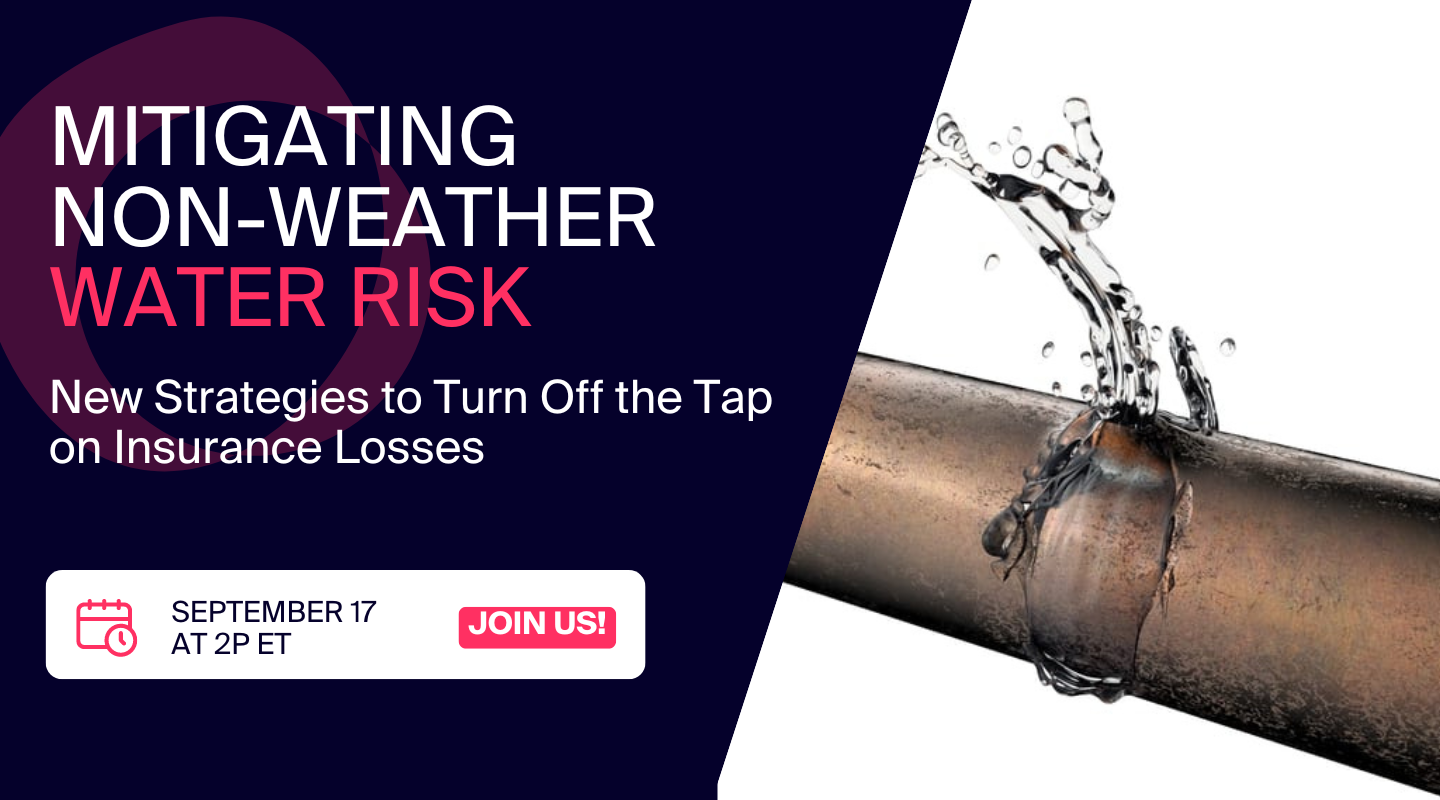
Exclusive Webinar: Mitigating Non-Weather Water Risk
New strategies to turn off the tap on insurance losses
From Costly Water Losses to Millions in Savings
Non-weather water claims are a leading cause of property insurance losses, costing insurers over $20 billion annually.
Join us for a FREE live webinar where our experts will discuss the latest trends, challenges, and insights to help you mitigate non-weather water risk.
What We'll Cover
Our experts Rob Silva, ACAS (Director of Customer Success) & Sam Fetchero (Head of Marketing) will present:
- Current Trends: Understand the rise in severity and total loss costs of non-weather water claims.
- Risk Assessment Challenges: Learn why traditional methods fall short in assessing non-weather water vulnerability.
- Key Risk Factors: Identify the main drivers of non-weather water damage.
- Strategic Insights: Discover strategies to improve your management of non-weather water claims.
- Z-WATER in Action: Experience our new AI-powered model that predicts non-weather water risk with unparalleled accuracy.
- Interactive Q&A: Get your questions answered by our experts.
Who Should Attend
This webinar is ideal for Executives, Product Managers, Actuaries, Underwriters, and CAT Modelers committed to enhancing their understanding and management of non-weather water risks.
Bonus Content
As a bonus, you'll receive our exclusive infographic, "Below the Surface: Research Reveals Knowledge Gap in Homeowner Water Loss Prevention and Coverage."
This research gives key insights into water loss experiences, coverage details, homeowner protection measures, and information on water shutoff devices and heater conditions.
Register Now
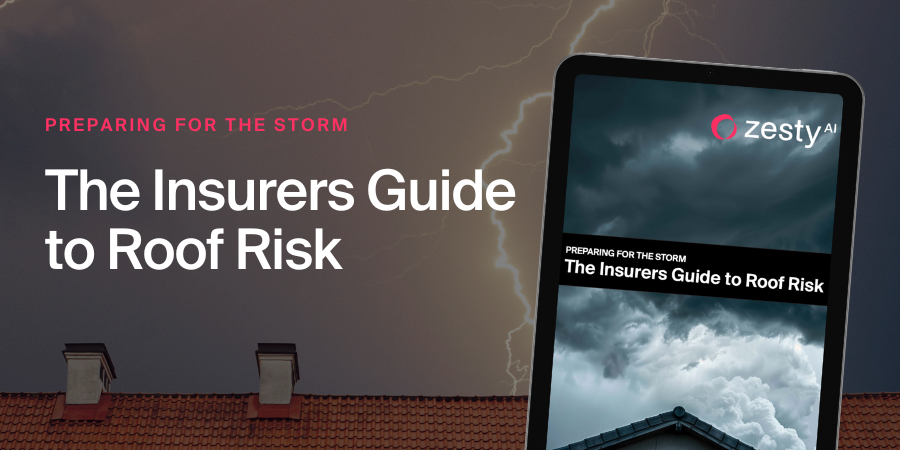
Now Available: The Insurers Guide to Roof Risk
Learn how leading insurers are mastering roof risk and maximizing lift
It’s hard to overstate how important the roof is from an insurability standpoint. The roof represents significant risks and potential opportunities, making it a critical focus area for insurers. This has become even more important in recent years as the impact of severe convective storms is often reflected in roof losses. Understanding this, ZestyAI has released new research for property insurers called The Insurers Guide to Roof Risk.
Download The Insurers Guide to Roof Risk
In an era where the severity and frequency of roof-related claims are on the rise, particularly due to the increasing impact of severe convective storms, innovative tools and strategies are essential. The Insurers Guide to Roof Risk provides actionable insights to improve risk assessment, underwriting processes, and overall business strategy.
What’s Inside the Guide?
The Insurers Guide to Roof Risk includes:
- Roof Failure Factors: Learn the underlying contributing factors behind why older roofs fail more often.
- Beyond Roof Age: Discover why roof complexity, condition, and climate are more important than roof age alone.
- Identifying Missing Risk Factors: Understand the key factors to roof risk that most traditional models miss.
- Advanced Risk Segmentation: See how using machine learning and new data sources can split risk more than 60 times better than traditional models.
- Portfolio Optimization: Access a comprehensive toolbox to optimize your portfolio and new business selection to generate exponential lift versus traditional models.
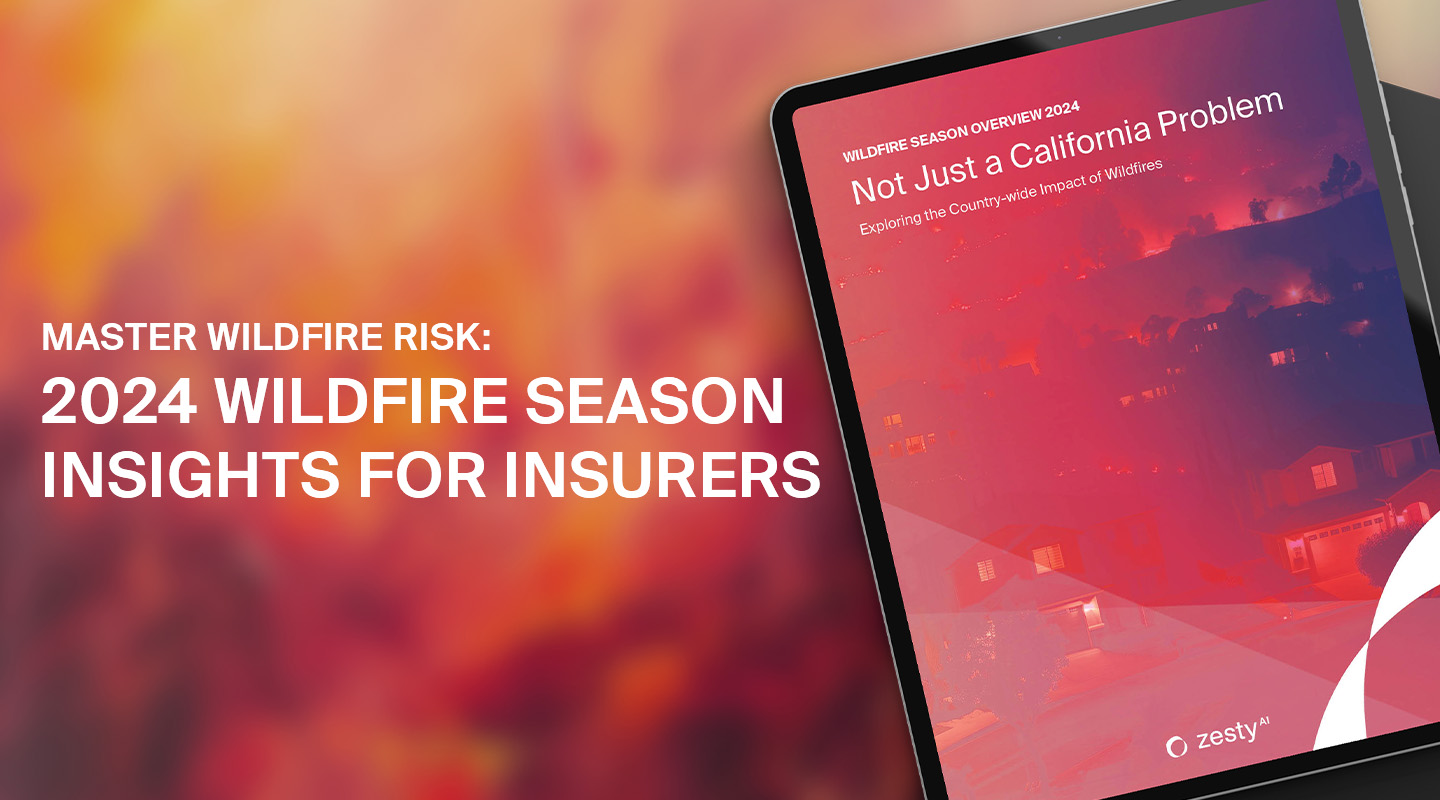
Now Available: ZestyAI’s 2024 Wildfire Season Overview
Annual Wildfire Season Overview provides insights to assist insurers in effectively managing wildfire risk.
Annual Wildfire Season Overview provides insights to assist insurers in effectively managing wildfire risk.
ZestyAI has released its annual Wildfire Season Overview for 2024. This year’s guide provides critical insights carriers need to stay ahead of the rapidly evolving wildfire landscape. Offering more than just data, this year’s guide is designed to help insurers make informed risk decisions in some of the country’s most volatile states.
Download ZestyAI's 2024 Wildfire Season Overview
This year’s guide includes:
- Countrywide Wildfire Impact Analysis: Understand how wildfires are affecting regions beyond traditional hotspots like CA, including significant events in TX & NM.
- Future Wildfire Trends: Explore predictions for the 2024 wildfire season and understand the long-term implications of current conditions on wildfire risks.
- Regulatory Insights: Stay updated on the latest regulations affecting wildfire risk assessment insurance practices.
- AI-driven Risk Models: Learn how ZestyAI's Z-FIRE model accurately predicts wildfire risks and assists insurers in making informed decisions.
- Property-Level Risk Assessments: Discover the importance of granular, property-specific risk evaluations to improve underwriting accuracy and transparency for consumers.
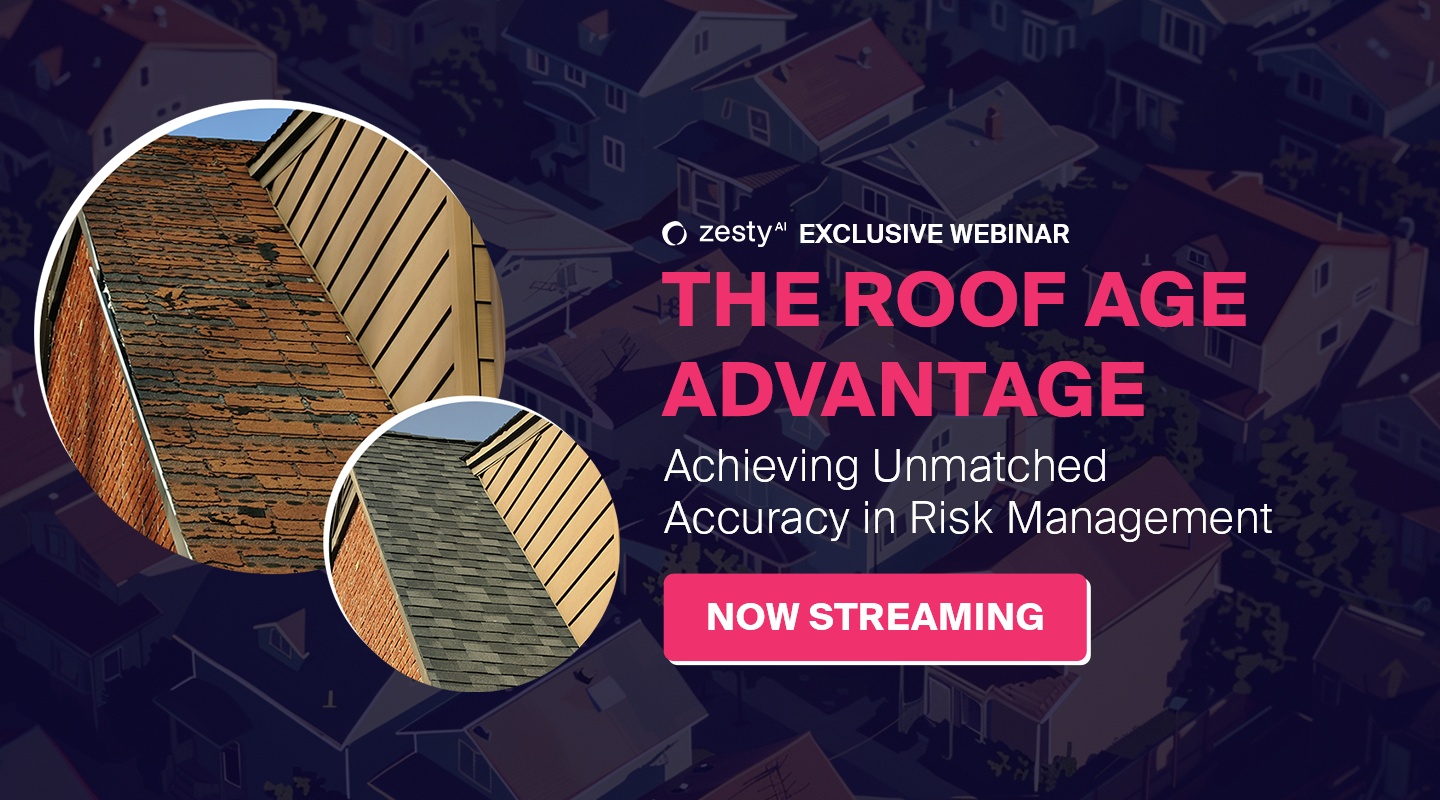
The Roof Age Advantage Webinar Now Available On Demand
Achieve unmatched accuracy in risk management
Costing insurers approximately $19 billion every year, roof claims stand as the primary driver of property insurance losses.
Traditional methods of obtaining roof age information are deeply flawed. Most carriers depend on policyholder or agent-reported data, which is often inaccurate, leading to blind spots in assessing property risk. In a recent ZestyAI survey, 63 percent of homeowners reported not knowing the age of their roof if they were not in their homes the last time it was replaced.
Join our expert panel for a deep dive into leveraging roof age analytics for a cutting-edge underwriting process and gain insider knowledge on:
- The Leading Cause of Claims: unveil the hidden truths behind roof-related claims and the costly consequences of outdated assessment methods.
- A New Era of Data: Learn about ZestyAI’s pioneering approach to roof age analytics, incorporating building permits, historical imagery, and AI for a comprehensive view
- Precision at Scale: See how to apply precise, AI-driven roof age data across your entire portfolio for consistent and reliable underwriting and claims decisions
- Technical Decision Making: Empower your actuaries and underwriters with the insights needed to enhance risk selection and optimize pricing strategies
- Efficiency in Operations: Streamline inspections and operations, focusing resources where they’re needed most, improving time-to-quote, and enriching the customer experience
- Best Practices: Learn how leading carriers are using roof age, roof condition, and peril-specific models to improve risk selection and lower combined ratios
This transformative session is available on demand. Learn how to enhance accuracy, efficiency, and profitability in property insurance.
Save Your Spot
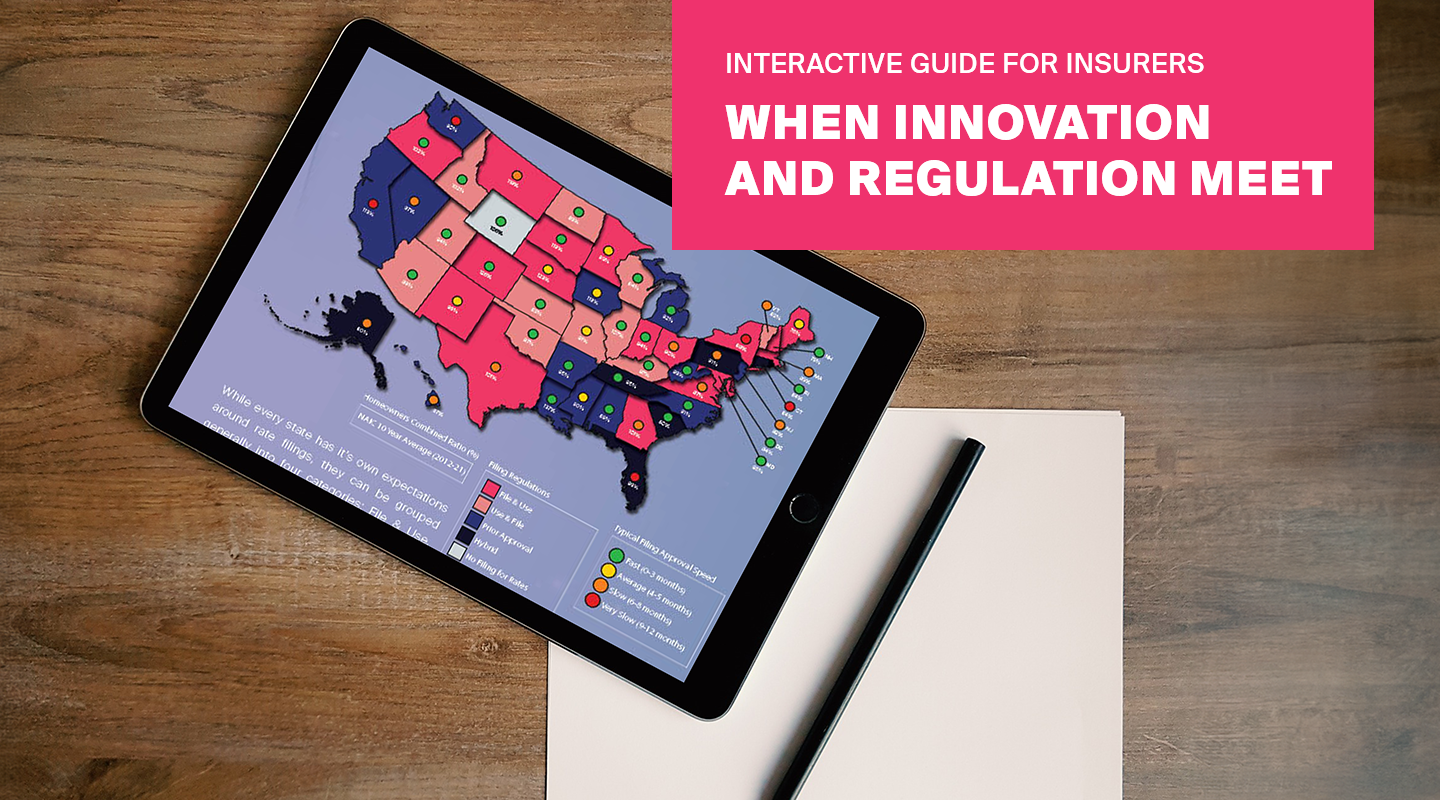
New Research: What Insurers Need to Know About AI and Regulatory Compliance
Master the future of insurance compliance with ZestyAI's interactive guide, featuring a state-by-state regulatory map, AI partnership checklist, and insights into emerging challenges.
In an ever-evolving regulatory environment, staying informed and adaptable is crucial. Our latest interactive guide, "When Innovation and Regulation Meet", offers a comprehensive toolkit for navigating the complexities of insurance compliance and the integration of AI technologies.
What's Inside?
- Regulatory Landscape Map: Delve into a detailed state-by-state analysis, uncovering the intricacies of filing laws and approval speeds.
- Staying Ahead of Regulation Changes: Learn how to stay prepared and ensure your compliance strategies are future-proof, aligning with the latest regulatory expectations.
- Essential AI Partner Checklist: Choosing the right AI partner is crucial for success. Our guide offers a meticulous checklist for selecting a partner that is not only compliant but also transparent and supportive, ensuring you make an informed decision.
- Emerging Regulatory Concerns: What do you need to know about privacy, bias, and AI oversight?
- Real-World Applications: Discover how ZestyAI's collaborative approach with regulatory entities has led to successful model approvals across the United States.
Why This Guide?
As the regulatory framework becomes increasingly complex, having a reliable and insightful resource is indispensable. Our guide is tailored for insurance professionals seeking to enhance their regulatory strategy, embrace AI innovation responsibly, and achieve a competitive edge in the market.
Ready to get up to speed on 2024's regulatory environment? Access the guide.
Now Streaming: LA Fires in Focus – What Insurers Need to Know
What Worked, What Didn’t, and What’s Next for Insurers
With insured losses projected to exceed $30 billion, the recent Los Angeles wildfires rank among the costliest in U.S. history—reshaping how insurers think about risk, resilience, and readiness.
Watch the Full Webinar → LA Fires in Focus: What Insurers Need to Know
In this on-demand webinar, experts from the Insurance Institute for Business & Home Safety (IBHS), the Western Fire Chiefs Association, Cal Poly’s WUI Fire Institute, and ZestyAI unpack what really happened—from frontline response to lab-based research and model performance—and share critical strategies insurers can use to prepare for what’s next.
Watch this session if you’re a Product Managers, Underwriters, Actuaries, and Risk & Innovation leaders looking to make informed decisions in an increasingly volatile wildfire landscape.
What You’ll Learn
- Key takeaways from the Los Angeles wildfires
- Research on structure-to-structure fire spread and resilience factors
- How wildfire risk models performed—what we got right (and wrong)
- Practical strategies to reduce exposure and strengthen resilience
Meet the Experts
- Anne Cope, Chief Engineer, IBHS
- Bob Roper, CEO, Western Fire Chiefs Association
- Frank Frievalt, Director, WUI Fire Institute at Cal Poly
- Kumar Duhvur, Co-Founder & CPO, ZestyAI
Connecticut Insurance Department Green Lights AI-Powered Roof Quality Solution
Insurers can leverage AI-driven, property-specific roof condition insights for more accurate underwriting and rating decisions across the state
ZestyAI today announced that the Connecticut Insurance Department (CID) has formally approved its Roof Quality solution for use in residential property underwriting.
CID conducted a comprehensive third-party actuarial review of ZestyAI’s model, evaluating methodology, data integrity, and regulatory compliance against its rigorous standards.
What CID’s Approval Means for Carriers
Part of Z-PROPERTY™ , the Roof Quality model enables insurers to assess and price roof risk with unmatched accuracy.
By combining 3D property analysis, high-resolution aerial imagery, and AI trained on extensive real-world data, the platform replaces subjective or incomplete assessments with objective, property-specific intelligence.
The model classifies roofs into five standardized condition levels, helping insurers assess property risk with greater precision. It distinguishes between surface-level wear and structural issues, flagging meaningful signs of deterioration such as missing shingles, tarps, or water pooling.
Bryan Rehor, Director of Regulatory Affairs at ZestyAI, said:
“Roof condition is one of the strongest predictors of loss, yet historically one of the hardest to assess without costly inspections. This approval affirms the accuracy, fairness, and transparency of our approach and reflects our broader commitment to aligning innovation with consumer protection.”
How ZestyAI’s Roof Quality Model Improves Risk Assessment
ZestyAI maintains active engagement with the National Association of Insurance Commissioners (NAIC) and state-level departments to ensure its models meet evolving standards for fairness, transparency, and consumer protection.
By proactively filing through in-house Rating and Advisory Organizations, ZestyAI ensures its models meet the strictest regulatory standards before reaching the market.
ZestyAI’s models are trusted by regulators and insurers to assess risk in the nation’s most climate-exposed regions with Z-FIRE, ZestyAI’s wildfire risk model, approved by regulators in all western states. Its Severe Convective Storm suite is approved in 16 states across the Midwest, Great Plains, and South.
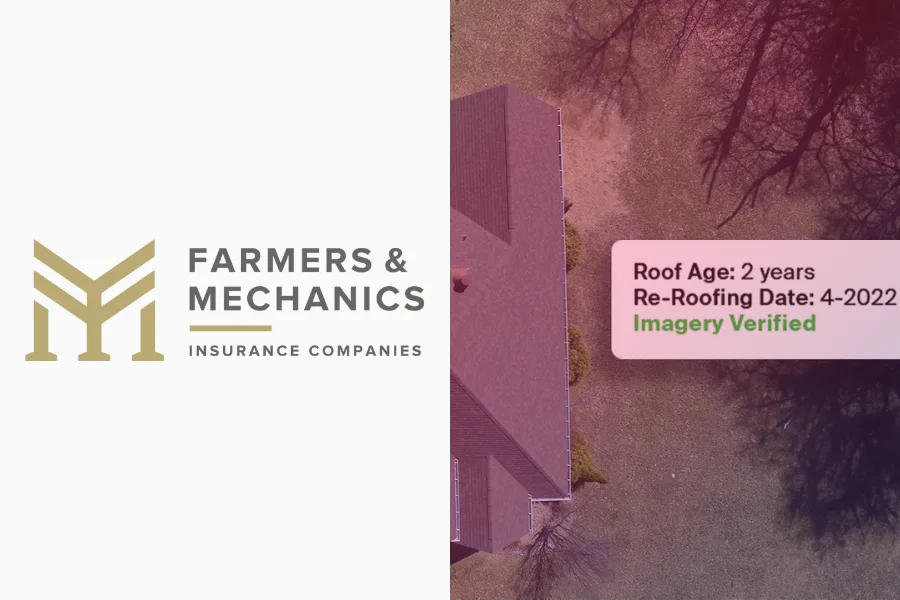
Farmers and Mechanics Mutual Insurance Company of West Virginia Adopts ZestyAI to Strengthen Underwriting and Risk-Based Pricing
AI-powered property risk insights support greater rating precision, lower inspection costs, and smarter underwriting decisions across West Virginia.
ZestyAI today announced a new partnership with Farmers and Mechanics Mutual Insurance Company of West Virginia (FMIWV) to strengthen underwriting accuracy and improve risk-based pricing.
Why Accurate Roof Data Matters More Than Ever
Roof claims are the leading driver of insurance losses, yet many carriers still depend on self-reported data, which can be unreliable, or physical inspections, which are costly and hard to scale. Recent research shows that 15% of roofs are at least eight years older than reported, highlighting the need for more reliable, data-driven alternatives.
To address long-standing challenges in accessing reliable property insights, FMIWV selected Z-PROPERTY™.
Why FMIWV Chose Z-PROPERTY
Dan Otto, Senior Vice President and Chief Financial Officer at FMIWV, said:
"After evaluating several options in recent years, we chose ZestyAI based on their strong coverage and ease of implementation. Getting started using the technology was easy. We’re particularly focused on using their property insights to provide additional underwriting information for new business and renewals.”
ZestyAI’s advanced insights help FMIWV:
- Identify high-risk properties early to prioritize mitigation and prevent losses
- Enhance risk selection and pricing precision with objective, property-level data
- Reduce inspection costs and turnaround time by minimizing the need for on-site assessments
- Streamline straight-through processing for low-risk properties to improve efficiency and speed to bind
- Reduce premium leakage by aligning pricing with actual exposure
“FMIWV is showing how regional carriers can lead with data-driven underwriting that improves operations and elevates the customer experience,” said Attila Toth, Founder and CEO of ZestyAI.
“By grounding decisions in reliable, property-level data, they’re improving efficiency, reducing risk, and raising the bar for underwriting and rating precision.”

Wildfire Risk Across the Nation
We’ve created a visual guide to where wildfire risk is rising—and where opportunities for mitigation exist.
Wildfire Risk Is Rising Nationwide
Wildfire seasons are getting longer, more destructive, and harder to predict—and they’re no longer just a Western U.S. concern. From the Southeast to the Midwest, wildfire risk is emerging in places many insurers haven’t traditionally watched.
What the Latest Data Reveals About Wildfire Exposure
Drawing from the latest national datasets and insights from ZestyAI’s Z-FIRE™ model, this visual guide to wildfire risk in the U.S. shows:
- New wildfire hotspots: Discover where risk is rising fastest.
- Mitigation gaps: Learn how a lack of defensible space is putting thousands of homes in danger across the country.
- Top risk drivers: See how features like overhanging trees and wooden roofs are fueling destruction in high-risk areas.
BONUS: You’ll also get access to our latest online event with IBHS and Western Fire Chiefs Association, The LA Fires in Focus: What Worked, What Didn’t, What’s Next for Insurers.
ZestyAI Product Updates: Smarter Models, Faster Workflows, and Richer Imagery
At ZestyAI, we’re continually enhancing our platform to help insurers better understand property risk, strengthen underwriting precision, and streamline operations. Over the last few months, our team has launched a series of updates that make our AI-powered solutions even more powerful and accessible.
From improvements in roof geometry and manufactured home modeling to expanded wildfire data on home hardening and structural vulnerability, plus faster APIs and faster APIs, these updates reflect our deep commitment to product excellence and customer success.
Smarter Risk Modeling for Manufactured Homes
Updated Manufactured Home Model in Z-PROPERTY
We’ve released an upgraded model for manufactured homes within Z-PROPERTY, trained on a broader set of imagery sources to improve data coverage and model accuracy.
This new version reduces the false positive rate, giving carriers greater confidence when evaluating mobile home risk—a critical upgrade for lines of business that rely on nuanced property insights.

Better Roof Geometry Analysis with the Roof Facet Model
Enhanced Accuracy and Speed in Roof Modeling
As part of our Digital Roof product, the Roof Facet model has been refined to deliver sharper roof geometry insights with faster processing times. This enhancement is especially valuable for customers scoring large portfolios, improving both speed and data quality.
Expanded Wildfire Risk Data Coverage
Compliance Pre-Fill Now Covers 99%+ of Wildfire Properties
We’ve expanded our Compliance Pre-Fill solution to support all wildfire-prone states, with property-level coverage now exceeding 99%. New on-demand access to critical wildfire mitigation features—including enclosed eaves, six-inch vertical clearance for siding, and noncombustible fencing—allows underwriters and compliance teams to make more accurate decisions with current data and zero added latency.
3D That Tells the Whole Story
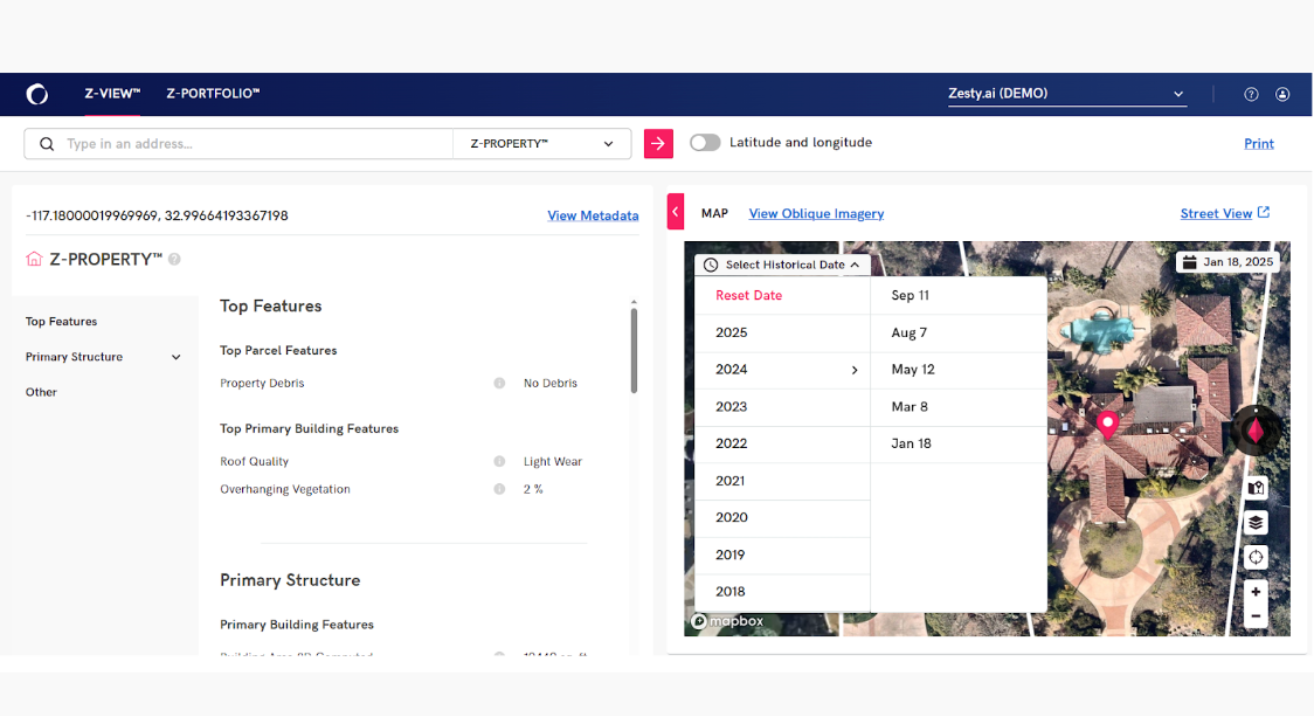
Access to Richer 3D and Historical Imagery
ZestyAI now provides access to a broader and deeper catalog of high-resolution and historical imagery, powered by best-in-class sources of imagery. These enhancements improve underwriting workflows and allow insurers to “time travel” and evaluate how a property’s condition has changed over time.
This capability is especially valuable in regulatory environments that require proof of property degradation before policy changes are made. Historical imagery also gives underwriters a fuller view of prior conditions, providing context for past underwriting decisions.
Performance Gains Across All APIs
Reduced Latency and Improved API Response Times
We’ve optimized our APIs to significantly reduce latency, improving the speed and reliability of data delivery across all ZestyAI products. Whether batch scoring, running real-time underwriting, or executing renewal workflows, you’ll experience faster performance and greater efficiency—saving valuable time across your organization.
A New and Improved Upload Experience in Z-PORTFOLIO
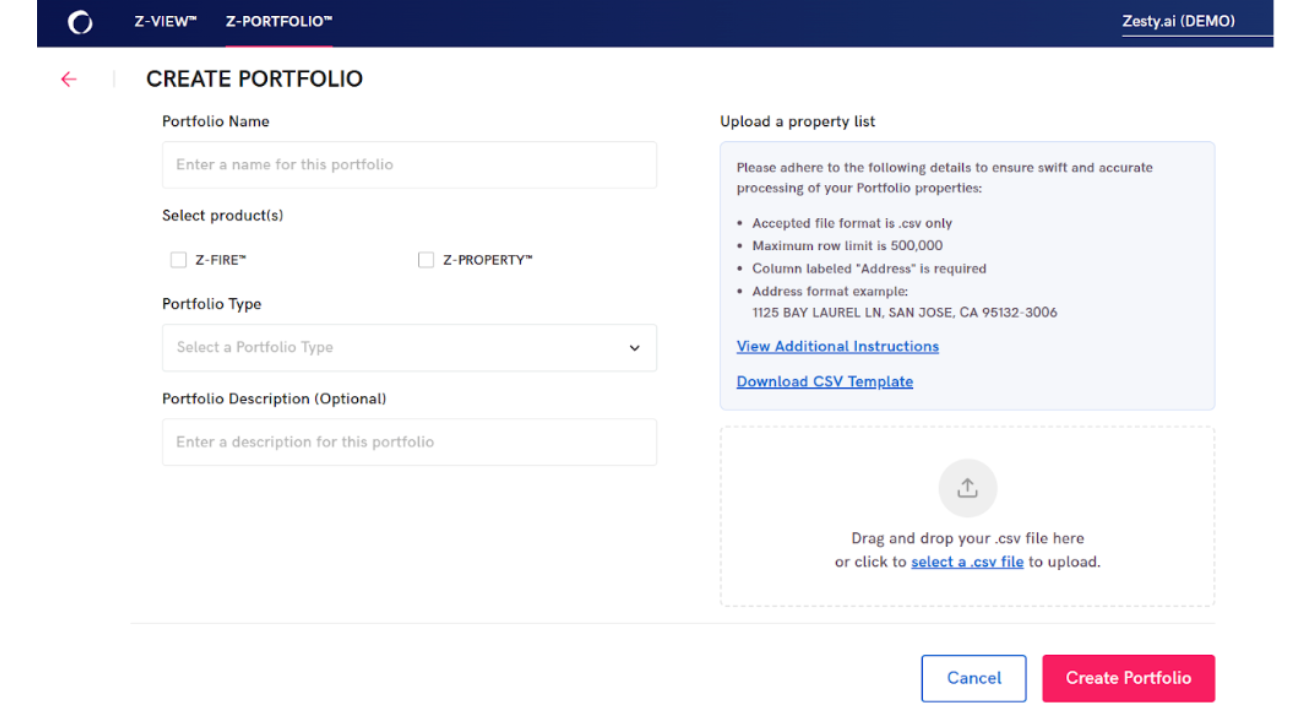
Redesigned Upload Page for Streamlined Workflow
We’ve redesigned the Z-PORTFOLIO upload experience to make portfolio submissions more intuitive and efficient. Instructions and templates are now centralized in one place, and users can specify the purpose of the upload—such as renewal or dislocation analysis—to unlock deeper insights into usage patterns. This update enhances the self-service experience and helps customers extract maximum value from portfolio analyses.
Driving Continuous Innovation in Insurance Risk Intelligence
These product updates are more than just technical enhancements; they’re part of a larger mission to transform property risk assessment through AI. By improving model precision, reducing friction in workflows, and delivering richer, more current data, we’re helping insurers stay ahead of emerging risks and changing market demands.
If you’d like to learn more about any of these updates or request a demo, reach out to your Customer Success Manager or contact us below.
Why Non-Weather Water Losses Are Quietly Eroding Profitability
New research reveals how insurers can rethink their strategy for the 4th costliest peril in homeowners insurance
The Silent Peril Reshaping Homeowners Insurance
Non-weather water damage rarely makes headlines, but it’s quietly eroding profitability across the country.
It is now the fourth costliest peril in homeowners insurance, and claim severity has increased 80% in the last decade—a trend that’s accelerating even as frequency remains relatively flat.
Traditional risk models struggle to capture the early warning signs behind these losses, leading to mispriced policies, undetected exposure, and rising volatility for carriers.
Want the full analysis? Download the complete “Winning the Fight Against Non-Weather Water Losses” guide.
Why Loss Severity Keeps Rising
Aging homes and overlooked system failures
Many of the most expensive losses stem from aging plumbing, deteriorating materials, and slow-burn failures that often go undetected until damage is significant.
Frequency is flat—severity is not
Loss patterns suggest that while the number of events hasn’t surged, the financial impact of each event has—a signal that traditional models are not capturing the right property-level predictors.
The Property Features Most Predictive of Water Losses
The overlooked attributes that traditional models miss
Standard territory- or age-based assessments often ignore the property-specific details that meaningfully influence water loss risk, including:
- supply line material and age
- plumbing configuration
- occupancy patterns
- system maintenance and upgrades
- moisture exposure and prior loss indicators
These factors vary widely between neighboring homes—yet most models treat them as identical.
Where Traditional Underwriting Falls Short
ZIP-code and age-based proxies mask true risk
Legacy approaches rely heavily on broad territory-level assumptions that overlook structural vulnerabilities and system conditions.
Limited visibility creates mispriced policies
Without property-level insight, high-risk homes are often underpriced while lower-risk homes subsidize them—driving loss ratio volatility over time.
Get deeper insights on the drivers of water loss severity in our full guide → “Winning the Fight Against Non-Weather Water Losses”
How AI and Property-Level Data Are Changing the Landscape
AI models trained on real-world claims data can identify early signals of potential water loss by analyzing the interaction between:
- plumbing systems
- property attributes
- historical patterns
- material degradation
- repair history
This enables carriers to segment risk accurately, adjust pricing, and reduce preventable losses—long before small issues turn into major claims.
What Homeowners Actually Understand About Water Risk
Misconceptions around coverage and prevention
ZestyAI’s research shows that many policyholders:
- misunderstand what is and isn’t covered
- underestimate how much damage water can cause
- rarely take preventive actions unless prompted
This disconnect creates an opportunity for carriers to strengthen education, mitigation, and customer engagement.
Steps Carriers Can Take Today
Improve segmentation and rating accuracy
Property-level signals enable more precise risk tiers and more stable long-term portfolios.
Strengthen mitigation and reduce loss severity
Insights help identify which homes are at elevated risk and where targeted mitigation can reduce exposure.
Enhance underwriting workflows with explainable insights
Transparent, explainable AI helps underwriters understand the key drivers behind elevated risk—supporting both decision-making and regulatory review.
Get the Full Guide
Our new research paper, Winning the Fight Against Non-Weather Water Losses, breaks down the trends reshaping this growing peril—and the strategies carriers can use to get ahead of it.
Access the Guide
See How Insights Turn Into Decisions
ZestyAI transforms data into action. Get a demo to see how the same AI powering our reports helps carriers make faster, smarter, regulator-ready decisions.